
Niacinamide vs Vitamin C: Which Brightening Ingredient Is Right for You?
Can't choose between niacinamide and Vitamin C? Both brighten skin but work differently. Learn which ingredient suits your skin type and concerns best.
WOW Skin Science Editorial Team
Beauty experts sharing science-backed skincare tips.
Niacinamide vs Vitamin C: Which Brightening Ingredient Is Right for You?
You're standing in front of your mirror, serum in hand, wondering — niacinamide or Vitamin C? Both promise brighter skin. Both are everywhere right now. And both have genuinely impressive science behind them. But they work very differently, and choosing the wrong one (or using them wrong together) can mean wasted money and zero results.
Here's the truth: there's no universal winner. The right choice depends on your skin type, your specific concerns, and honestly — your lifestyle. Let's break it all down, simply and honestly.
What Does "Brightening" Actually Mean?
Before comparing these two ingredients, it helps to understand what skin brightening really involves. Brightening isn't just about becoming "fair" — that's an outdated idea. Real brightening means reducing dullness, fading dark spots, evening out uneven patches, and giving your skin that healthy, lit-from-within glow.
In India, our skin faces a unique set of challenges. The humidity, pollution, and strong UV exposure we deal with daily can trigger excess melanin production — which is what causes those stubborn dark spots, post-acne marks, and patchy skin tone. Add to that the oiliness that comes with tropical weather, and you've got a recipe for a complexion that looks tired even when you're not.
Both niacinamide and Vitamin C target this melanin problem — but from very different angles.
Getting to Know Niacinamide
Niacinamide is a form of Vitamin B3. It's water-soluble, stable, and one of the gentlest active ingredients you can put on your skin. My grandmother would have called it "boring but reliable" — and honestly, she wouldn't be wrong.
Here's what niacinamide actually does inside your skin. It works by blocking the transfer of melanin (the pigment responsible for dark spots) from the cells that produce it to the surface skin cells. Less melanin transfer means fewer dark spots reaching the surface over time. Research suggests that a 5–10% concentration of niacinamide can visibly reduce hyperpigmentation with consistent use over 4–8 weeks.
But brightening is just one part of what niacinamide does. It also:
Regulates sebum production — a massive win if you have oily or combination skin, especially during Indian summers
Strengthens the skin barrier by boosting ceramide production
Reduces the appearance of enlarged pores — something so many of us deal with
Calms redness and inflammation, making it great for sensitive or acne-prone skin
Improves skin texture over time, making it look smoother and more refined
Niacinamide is forgiving. You can use it morning or night. It plays well with most other ingredients. It doesn't make your skin sun-sensitive. For someone just starting their active skincare journey, niacinamide is often the smarter first step.
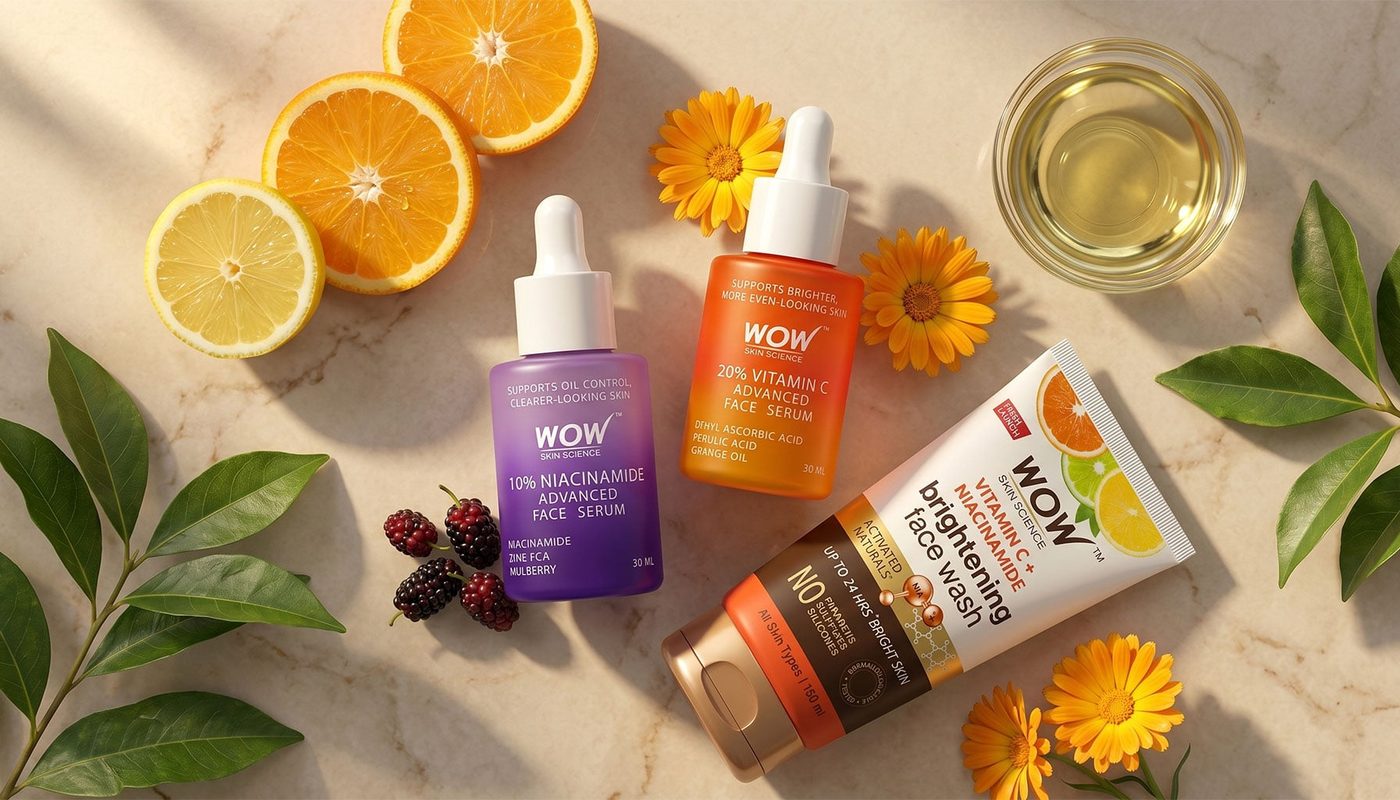
Products like the WOW Skin Science 10% Niacinamide Face Serum — which delivers that research-backed concentration along with hyaluronic acid for hydration — can really help if your main concerns are oily skin, open pores, or stubborn post-acne marks.
Shop: 10% Niacinamide Face Serum → →
Getting to Know Vitamin C
Vitamin C is the overachiever of the skincare world. Technically called L-ascorbic acid in its purest form, it's a powerful antioxidant that your skin actually needs to function well — and yet, your body can't produce it on its own. So you have to apply it topically.
Here's where Vitamin C shines differently from niacinamide. Instead of just blocking melanin transfer, Vitamin C actually inhibits tyrosinase — the enzyme that triggers melanin production in the first place. It attacks the problem upstream. This is why Vitamin C tends to work faster and more dramatically on existing dark spots and hyperpigmentation.
Beyond brightening, Vitamin C also:
Neutralises free radical damage from UV rays and pollution — critical for city-dwellers in Mumbai, Delhi, Bengaluru
Boosts collagen synthesis, which keeps skin firm and plump
Reduces the appearance of fine lines over time
Gives skin an immediate luminosity — many people notice a glow within the first few weeks
The catch? Vitamin C is notoriously unstable. Pure L-ascorbic acid oxidises when exposed to light and air, turning yellow or orange and losing its effectiveness. This is why the formulation matters enormously. Look for Vitamin C in airtight, dark packaging, and check for derivatives like sodium ascorbyl phosphate or ascorbyl glucoside if you have sensitive skin — they're gentler and more stable.
If you're dealing with sun damage, dull skin, or want to visibly brighten your complexion faster, Vitamin C is your ingredient. The WOW Skin Science Vitamin C Toner is a lovely way to incorporate Vitamin C into your routine without the heaviness of a serum — especially if you prefer lighter textures in humid weather.
Head-to-Head: Which One Is Right for You?
Now for the part you've been waiting for. Here's an honest comparison based on different skin types and concerns:
If You Have Oily or Acne-Prone Skin
Go with niacinamide first. It controls excess oil, calms inflammation, minimises pores, and fades post-acne marks — all in one step. Vitamin C is great too, but niacinamide addresses the root issues more directly for this skin type. Once your skin is more balanced, you can layer Vitamin C on top.
If You Have Dry or Mature Skin
Vitamin C is your best friend. It supports collagen production, fights free radical damage, and gives you that plump, luminous look. Pair it with a good moisturiser and you'll see a real difference in texture and radiance over 6–8 weeks.
If You Have Sensitive or Reactive Skin
Start with niacinamide. It's one of the most well-tolerated actives in skincare. Vitamin C, especially in its pure L-ascorbic acid form, can sometimes cause tingling or irritation on sensitive skin. If you want to try Vitamin C, opt for gentler derivatives and introduce it slowly — once or twice a week to begin.
If You Have Combination Skin (the most common skin type in India)
Use both — strategically. Niacinamide in the morning to control oil and protect your barrier. Vitamin C in the morning too, actually — since its antioxidant properties work best as a shield against daytime UV and pollution. More on this below.
If Your Main Concern Is Hyperpigmentation and Sun Spots
Vitamin C will show faster results. But combining it with niacinamide gives you a double-action approach — inhibiting melanin production while also blocking its transfer to the skin's surface. Research suggests this combination may be more effective than either ingredient alone.
Can You Use Niacinamide and Vitamin C Together?
There's an old myth floating around that niacinamide and Vitamin C cancel each other out or cause irritation when used together. This was based on outdated research suggesting the two could form a compound called niacin that causes flushing. Here's the reality: modern, well-formulated products use concentrations and pH levels that make this extremely unlikely. Dermatologists now widely consider this combination safe and even complementary.
That said, if you're new to actives, don't layer both in the same step initially. Give your skin time to adjust to each ingredient separately. Once your skin is comfortable, you can use them together or in sequence.
A smart approach many skincare enthusiasts swear by: apply Vitamin C first (it works at a lower pH), let it absorb for a few minutes, then follow with niacinamide. This way, both ingredients work at their optimal conditions without interfering with each other.
If you want a simple, fuss-free way to get both ingredients working together, the WOW Skin Science Vitamin C & Niacinamide Radiance Boosting Kit is worth exploring — it takes the guesswork out of combining these two powerhouses.
Shop: Vitamin C & Niacinamide Radiance Boosting Kit → →
Building Your Brightening Routine: Practical Tips
Getting the most out of either ingredient comes down to consistency and a few smart habits.
Always wear sunscreen. This is non-negotiable. Both niacinamide and Vitamin C help fade dark spots — but UV exposure will keep creating new ones. An SPF 30 or higher, applied every morning, is what makes your brightening routine actually work over time.
Be patient. Skin takes time. Most people see noticeable results in 6–12 weeks of consistent use. If you're switching products every two weeks, you're not giving anything a real chance.
Use the right concentration. For niacinamide, research supports 5–10% as the effective range. Below 2% and you won't see much. For Vitamin C, 10–20% is the sweet spot for most skin types.
Store Vitamin C properly. Keep it away from direct sunlight. If your Vitamin C serum has turned dark orange or brown, it's oxidised and won't be effective anymore.
Introduce one active at a time. If you're new to both, start with niacinamide for 4 weeks. Then add Vitamin C. This way, if your skin reacts, you know exactly what caused it.
Don't forget your neck and chest. These areas show sun damage and pigmentation too, and they're often neglected. Extend your serum application downward.
The Bottom Line
Niacinamide and Vitamin C are both genuinely excellent brightening ingredients — but they serve slightly different purposes. Niacinamide is the steady, reliable multi-tasker that's especially brilliant for oily, acne-prone, or sensitive skin. Vitamin C is the fast-acting, antioxidant-rich powerhouse that tackles existing pigmentation and gives you that visible glow.
You don't always have to choose just one. With the right approach, using both can give your skin a more complete brightening effect than either could alone. Start with what your skin needs most right now, build your routine slowly, and trust the process. Bright, even-toned skin isn't a dream — it just takes the right ingredients and a little patience.
Enjoyed this article?
Get more beauty tips and skincare guides delivered to your inbox.
Related Articles
WOW Aloe Vera Gel: മിക്കവർ നിഷ്കാസനം ചെയ്യുന്നത്
മിക്കവരും അലോ വെരാ ജെൽ വെറും സൂര്യാഘാതത്തിനായി മാത്രം ഉപയോഗിക്കുന്നു — എന്നാൽ അതിൽ കൂടുതലും ഉണ്ട്. WOW Skin Science ന്റെ ശുദ്ധമായ, അഡിറ്റിവ് രഹിത ഫോർമുല എന്തുകൊണ്ട് വ്യത്യസ്തമാണെന്നും ഈ ശക്തിശാലിയായ ഘടകത്തിൽ നിന്ന് സর്വാധികം പ്രയോജനം നേടുന്നതെങ്ങനെയെന്നും കണ്ടെത്തുക.
WOW Aloe Vera Gel: ಹೆಚ್ಚಿನ ಜನರು ತಪ್ಪಿಸಿಕೊಳ್ಳುವ ವಿಷಯಗಳು
ಹೆಚ್ಚಿನ ಜನರು ಅಲೋ ವೆರಾ ಜೆಲ್ ಅನ್ನು ಸೂರ್ಯನ ಸುಡುವಿಕೆಗೆ ಮಾತ್ರ ಬಳಸುತ್ತಾರೆ — ಆದರೆ ಇದಕ್ಕೆ ಇನ್ನೂ ಬಹಳಷ್ಟು ಇದೆ. WOW Skin Science ನ ಶುದ್ಧ, ಸೇರಿಸಿದ ವಸ್ತುವಿಲ್ಲದ ಸೂತ್ರವು ಏಕೆ ಭಿನ್ನವಾಗಿದೆ ಮತ್ತು ಈ ಶಕ್ತಿಶಾಲಿ ಘಟಕದಿಂದ ಹೆಚ್ಚಿನ ಪ್ರಯೋಜನ ಪಡೆಯುವುದು ಹೇಗೆ ಎಂಬುದನ್ನು ಕಂಡುಹಿಡಿಯಿರಿ.
WOW Aloe Vera Gel: বেছিভাগ মানুহে কি মিছ কৰে
বেছিভাগ মানুহে এলোভেৰা জেল কেৱল ৰ'দত পোৰা ঠাইৰ বাবে ব্যৱহাৰ কৰে — কিন্তু ইয়াৰ আৰু অনেক কিবা আছে। আৱিষ্কাৰ কৰক কিয় WOW Skin Science ৰ বিশুদ্ধ, কোনো সংযোজন নথকা ফৰ্মুলা আলাদা আৰু এই শক্তিশালী উপাদানটোৰ পৰা সৰ্বোচ্চ সুবিধা কেনেকৈ পাব।