
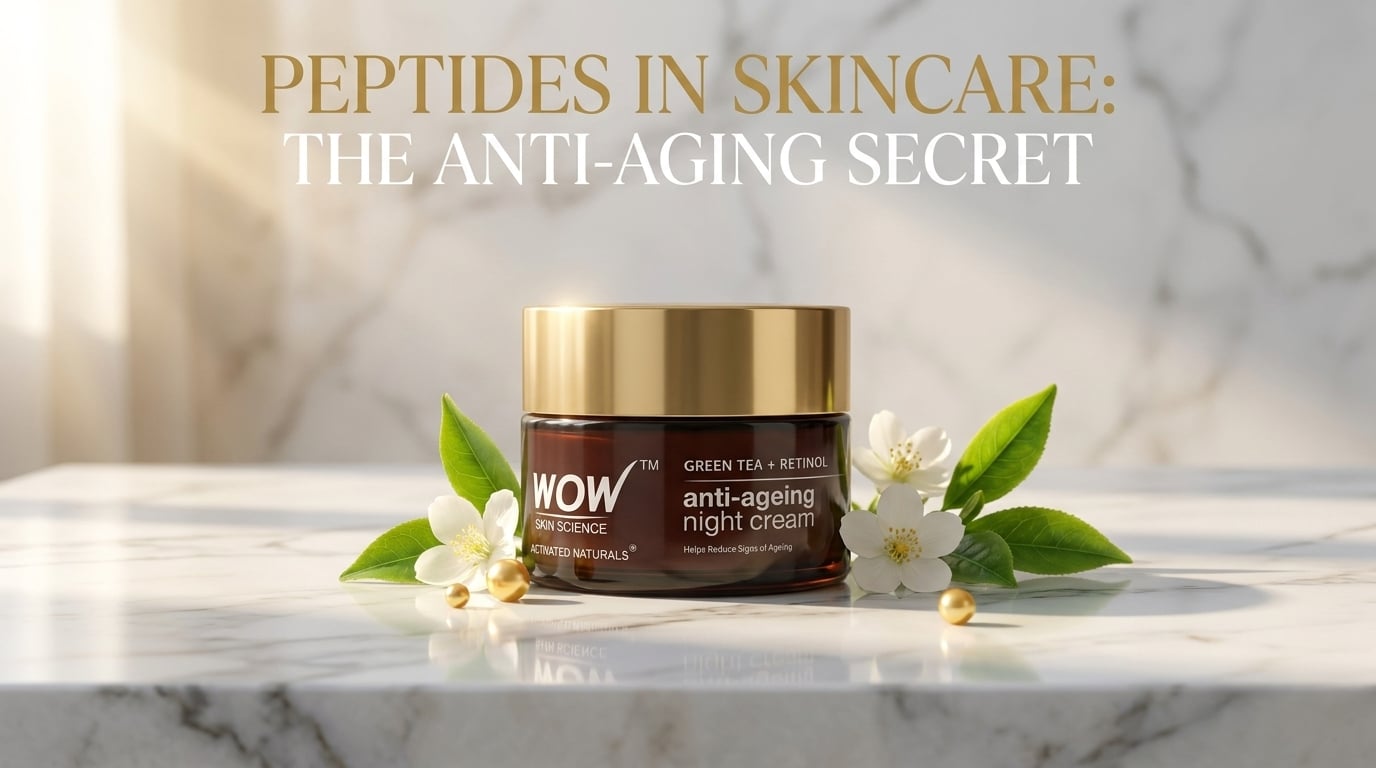
Peptides in Skincare: The Anti-Aging Secret
Peptides are protein fragments that signal your skin to produce more collagen. These anti-aging powerhouses help reduce wrinkles and improve skin firmness.
WOW Skin Science Editorial Team
Beauty experts sharing science-backed skincare tips.
What Are Peptides and How Do They Work in Skincare?
Remember those expensive anti-aging creams your mother kept on her dressing table? The ones she'd apply religiously every night? Well, peptides are probably why they worked so well. These tiny protein fragments have become the gold standard in anti-aging skincare — and for good reason.
Peptides are like messengers for your skin. They tell your cells to produce more collagen, repair damage, and basically act younger. Think of them as WhatsApp messages to your skin cells, giving them specific instructions on what to do.
The Science Behind Peptides
Here's the simple truth: peptides are short chains of amino acids. When you link amino acids together, you get peptides. Link peptides together, and you get proteins like collagen and elastin — the building blocks that keep your skin firm and bouncy.
Your skin naturally produces peptides. But as we age (especially after 25), production slows down. That's when fine lines start appearing, and your skin loses that plump, youthful look. Adding peptides through skincare helps kickstart your skin's natural repair process.
The magic happens because peptides are small enough to penetrate your skin. Unlike collagen molecules (which are too large), peptides can actually reach the deeper layers where they're needed most.
Different Types of Peptides in Skincare
Not all peptides are created equal. Each type has a specific job:
Signal Peptides — These are the bosses. They tell your skin to produce more collagen and elastin. Matrixyl and palmitoyl pentapeptide are popular ones you'll see on ingredient lists.
Carrier Peptides — Think of these as delivery trucks. They carry trace elements like copper to your skin cells. Copper peptides are especially good for healing and regeneration.
Enzyme-Inhibiting Peptides — These slow down the breakdown of collagen. Argireline is the star here — some call it "Botox in a bottle" (though that's a bit of an exaggeration).
Neurotransmitter Peptides — These relax facial muscles to reduce expression lines. They work similarly to Botox but are much gentler and don't involve needles.
How Peptides Penetrate the Skin Barrier
Your skin is smart — it has a protective barrier that keeps most things out. But peptides have a special pass. Their small molecular size (under 500 daltons) lets them slip through the gaps between skin cells.
Once inside, peptides bind to receptors on your skin cells. It's like fitting a key into a lock. This binding triggers specific responses — more collagen production, better hydration, or reduced inflammation.
The best part? Peptides work with your skin's natural processes. They don't force changes but encourage your skin to behave like it did when you were younger.
The Anti-Aging Benefits of Peptides
My dermatologist friend once told me, "If you want to age gracefully, make peptides your best friend." After seeing the research (and the results on my own skin), I completely agree.
Boosting Collagen Production
Collagen is like the scaffolding of your skin. It keeps everything firm and structured. After age 20, we lose about 1% of collagen every year. By 40, that loss becomes visible as sagging and wrinkles.
Peptides signal your fibroblasts (collagen-making cells) to get back to work. Studies show that regular peptide use can increase collagen production by up to 30% in 12 weeks. That's like turning back the clock on your skin's support system.
Reducing Fine Lines and Wrinkles
Here's what actually works: peptides fill in the gaps where collagen has broken down. They plump up the skin from within, making fine lines less noticeable. Deep wrinkles take longer, but you'll see improvement there too.
Most people notice smoother skin texture within 4-6 weeks. Those tiny lines around your eyes? They're usually the first to improve. Deeper forehead lines and laugh lines need about 3-4 months of consistent use.
Improving Skin Elasticity and Firmness
Remember how your skin used to bounce back when you pressed it? That's elasticity. Peptides help restore this bounce by stimulating elastin production alongside collagen.
The improvement is gradual but real. Your jawline becomes more defined. Cheeks look lifted. That slight sagging around the mouth? It tightens up. Indian skin, which tends to lose elasticity faster in our climate, responds particularly well to peptide treatments.
Enhanced Skin Barrier Function
Your skin barrier is like a security guard — it keeps moisture in and irritants out. Peptides strengthen this barrier by increasing ceramide production and improving cell communication.
A stronger barrier means less water loss, better protection against pollution, and fewer reactions to products. This is especially important in cities like Delhi or Mumbai, where pollution levels can wreak havoc on your skin.
Popular Peptides to Look for in Skincare Products
Not sure which peptides to look for? Here are the heavy hitters that actually deliver results:
Matrixyl (Palmitoyl Pentapeptide-4)
Matrixyl is the OG of anti-aging peptides. It's been studied for over 20 years and consistently shows impressive results. This peptide stimulates collagen types I, IV, and VII — basically, all the important ones.
Look for concentrations between 3-8% for best results. Matrixyl works beautifully in serums and moisturizers. It's gentle enough for daily use and plays well with other ingredients.
Argireline (Acetyl Hexapeptide-8)
Called "topical Botox," Argireline relaxes facial muscles to reduce expression lines. It's particularly effective on forehead lines and crow's feet. Unlike actual Botox, it doesn't freeze your face — you can still smile naturally!
The sweet spot is 5-10% concentration. Higher isn't always better — too much can make your skin feel tight. Start with a lower concentration and build up if needed.
Copper Peptides (GHK-Cu)
Copper peptides are multitaskers. They boost collagen, improve healing, reduce inflammation, and even have antioxidant properties. If you have acne scars or uneven texture, copper peptides are your friend.
These work best at 0.5-1% concentration. They can be a bit irritating for sensitive skin, so patch test first. The blue or green tint in copper peptide products? That's normal — it's the copper showing through.
Palmitoyl Tripeptide-1 and Tetrapeptide-7
This dynamic duo often comes together in products. Tripeptide-1 boosts collagen, while Tetrapeptide-7 reduces inflammation and puffiness. Together, they're excellent for the delicate eye area.
You'll find these in many eye creams at 1-3% concentration. They're particularly good for reducing under-eye bags and that crepey texture that develops with age.
How to Incorporate Peptides into Your Skincare Routine
Getting the most from peptides isn't complicated, but timing and layering matter. Here's your game plan:
Morning vs. Evening Application
Peptides work round the clock, so you can use them morning or night. For anti-aging benefits, I prefer nighttime — that's when your skin does most of its repair work.
Morning peptide application works great under sunscreen. It creates a protective layer and helps your SPF sit better. Just make sure to let each layer absorb before applying the next.
Layering Peptides with Other Ingredients
The golden rule: thinnest to thickest consistency. Start with toners, then serums, then moisturizers. Peptide serums usually go after any water-based treatments but before heavier creams.
Wait 30-60 seconds between layers. This gives each product time to penetrate properly. Pat, don't rub — this helps with absorption and prevents pilling.
What Ingredients Work Well with Peptides
Peptides are team players. They work beautifully with:
Hyaluronic acid — Draws moisture to plump skin
Niacinamide — Brightens and strengthens barrier
Ceramides — Restore protective barrier
Antioxidants — Protect against free radical damage
My favorite combo? Peptide serum followed by niacinamide in the morning, then hyaluronic acid moisturizer. Your skin will thank you.
Ingredients to Avoid Mixing with Peptides
Some ingredients can deactivate peptides or cause irritation:
Direct acids (AHAs/BHAs) — Use on alternate nights
Vitamin C (L-ascorbic acid) — The pH difference reduces effectiveness
Retinol — Can be used together, but introduce slowly
If you love your acids or retinol, use them on alternate nights. Monday, Wednesday, Friday for acids/retinol; Tuesday, Thursday, Saturday for peptides. Sunday can be your recovery day with gentle, hydrating products.
Choosing the Right Peptide Products for Your Skin Type
One size doesn't fit all in skincare. Here's how to pick peptides for your specific needs:
Peptides for Dry and Mature Skin
Dry, mature skin needs heavy-hitting hydration plus collagen support. Look for rich creams with multiple peptides, especially Matrixyl and copper peptides. These should be combined with hydrating ingredients like squalane or shea butter.
Concentration matters here — go for 5-10% peptide content in a nourishing base. Apply on damp skin for better absorption. My mother swears by this technique, and her skin at 65 looks better than many 40-year-olds.
Peptides for Oily and Acne-Prone Skin
Yes, oily skin needs anti-aging care too! Choose lightweight, gel-based formulas with peptides like Argireline or palmitoyl tetrapeptide-7. These won't clog pores but still deliver anti-aging benefits.
Look for water-based serums with 3-5% peptide concentration. Copper peptides are especially good if you have acne scars — they help with healing and evening out texture.
Peptides for Sensitive Skin
Sensitive skin requires a gentle approach. Start with lower concentrations (1-3%) and simple formulas. Palmitoyl tripeptide-1 is usually well-tolerated and helps strengthen the skin barrier.
Avoid products with too many active ingredients. A simple peptide serum with soothing ingredients like centella asiatica or green tea works best. Patch test everything — your jawline is a good spot.
Concentration and Formulation Tips
Higher concentration isn't always better. Most peptides work well at 2-10% concentration. Beyond that, you might experience irritation without additional benefits.
Check the ingredient list — peptides should be in the top 5-7 ingredients. If they're listed near fragrance or preservatives, the concentration is probably too low to be effective. Also, look for airless pump bottles — they protect peptides from degradation.
Key Takeaways: Maximizing Your Peptide Skincare Results
After years of using and recommending peptides, here's what really makes a difference:
Consistency is Key
Peptides aren't overnight miracles. They work by gradually rebuilding your skin's structure. Missing days or weeks disrupts this process. Make peptides part of your daily routine, like brushing your teeth.
Set reminders if needed. Keep your peptide products where you'll see them. The most expensive serum won't work if it's sitting unused in your cabinet.
Realistic Timeline for Results
Here's the truth about peptide timelines:
2-4 weeks: Improved hydration and skin texture
6-8 weeks: Fine lines start softening
12 weeks: Noticeable improvement in firmness
6 months: Significant changes in deeper wrinkles
Take progress photos every month. The changes are gradual, and photos help you see improvements you might miss in the mirror.
Signs Your Peptide Products Are Working
How do you know it's working? Watch for these signs:
Your foundation sits better on your skin
Skin feels plumper when you wake up
Fine lines look softer in harsh lighting
Your face has a subtle "lifted" look
Makeup creasing reduces around eyes and smile lines
The best sign? When people start asking what you're using. That natural, healthy glow is peptides doing their job.
Frequently Asked Questions About Peptides in Skincare
Can I use peptides with retinol in my skincare routine?
Yes, but introduce them carefully. Start by using retinol and peptides on alternate nights for 2-3 weeks. Once your skin adjusts, you can layer them — peptides first, wait 10 minutes, then retinol. Many people find this combination gives better results than either ingredient alone. The peptides help reduce retinol irritation while boosting anti-aging benefits.
At what age should I start using peptide skincare products?
Prevention beats correction every time. Starting peptides in your mid-20s helps maintain collagen levels before significant loss occurs. That said, it's never too late to start. Whether you're 25 or 65, peptides will benefit your skin. The key is choosing the right formulation for your age and concerns.
Are peptides safe for pregnant women to use?
Peptides are generally considered safe during pregnancy and breastfeeding. They work on the skin's surface and don't absorb into the bloodstream like retinoids. However, always check with your doctor first. Stick to simple formulas without additional actives, and avoid anything with essential oils or strong fragrances.
How long do peptide serums last once opened?
Most peptide serums stay effective for 6-12 months after opening. Look for products in airless pumps or dark bottles — these protect peptides from air and light degradation. Store them in a cool, dry place (not your steamy bathroom). If the serum changes color, smell, or texture, it's time to replace it.
Can peptides replace Botox or other cosmetic procedures?
Peptides are powerful, but they're not injectable-level powerful. They can soften fine lines and improve skin quality, making you look refreshed and younger. But deep wrinkles or significant sagging need professional treatments. Think of peptides as your daily maintenance — they'll help you need those procedures less often or later in life.
Enjoyed this article?
Get more beauty tips and skincare guides delivered to your inbox.
Related Articles
WOW Science: ಸ್ಕಿನ್ಕೇರ್ ಪದಾರ್ಥಗಳ ಬಗ್ಗೆ ಹೆಚ್ಚಿನ ಜನರು ಏನು ತಪ್ಪಿಸುತ್ತಾರೆ
ಹೆಚ್ಚಿನ ಜನರು ವೈಜ್ಞಾನಿಕವಾಗಿ ಸಮರ್ಥಿತ ಸ್ಕಿನ್ಕೇರ್ ಪದಾರ್ಥಗಳನ್ನು ಸಂಪೂರ್ಣವಾಗಿ ತಪ್ಪಾಗಿ ಬಳಸುತ್ತಾರೆ. ಪ್ರಕಾಶಮಾನ ಚರ್ಮ ಮತ್ತು ವ್ಯರ್ಥವಾದ ಹಣದ ನಡುವಿನ ವ್ಯತ್ಯಾಸ ಮಾರ್ಕೆಟಿಂಗ್ ಹೈಪ್ ಅಲ್ಲ, ಆದರೆ ನಿಜವಾದ ರಸಾಯನಶಾಸ್ತ್ರವನ್ನು ಅರ್ಥಮಾಡಿಕೊಳ್ಳುವುದರ ಮೇಲೆ ಅವಲಂಬಿತವಾಗಿದೆ.
WOW Science: ତ୍ୱଚା ପରିଚର୍ଯ୍ୟା ଉପାଦାନ ବିଷୟରେ ଅଧିକାଂଶ ଲୋକ କ'ଣ ମିସ୍ କରନ୍ତି
ଅଧିକାଂଶ ଲୋକ ବୈଜ୍ଞାନିକ ଭାବେ ସମର୍ଥିତ ତ୍ୱଚା ପରିଚର୍ଯ୍ୟା ଉପାଦାନ ସଂପୂର୍ଣ୍ଣ ଭାବେ ଭୁଲ ଭାବେ ବ୍ୟବହାର କରନ୍ତି। ଉଜ୍ଜ୍ୱଳ ତ୍ୱଚା ଏବଂ ନଷ୍ଟ ଅର୍ଥର ମଧ୍ୟରେ ପାର୍ଥକ୍ୟ ମାର୍କେଟିଂ ହାଇପ୍ ନୁହେଁ, ବରଂ ପ୍ରକୃତ ରସାୟନ ବିଜ୍ଞାନ ବୁଝିବାରେ ନିହିତ।
WOW Science: ਸਕਿਨਕੇਅਰ ਸਮੱਗਰੀ ਬਾਰੇ ਜ਼ਿਆਦਾਤਰ ਲੋਕ ਕੀ ਮਿਸ ਕਰਦੇ ਹਨ
ਜ਼ਿਆਦਾਤਰ ਲੋਕ ਵਿਗਿਆਨ-ਸਮਰਥਿਤ ਸਕਿਨਕੇਅਰ ਸਮੱਗਰੀ ਬਿਲਕੁਲ ਗਲਤ ਤਰੀਕੇ ਨਾਲ ਵਰਤਦੇ ਹਨ। ਚਮਕਦਾਰ ਚਮੜੀ ਅਤੇ ਬਰਬਾਦ ਪੈਸੇ ਵਿੱਚ ਅੰਤਰ ਅਸਲ ਰਸਾਇਣ ਨੂੰ ਸਮਝਣ ਵਿੱਚ ਹੈ, ਮਾਰਕੀਟਿੰਗ ਹਾਈਪ ਵਿੱਚ ਨਹੀਂ।