

WOW Science: What Most People Miss About Supplements
Most people check supplement labels for milligrams and certifications, but miss the real science behind effectiveness. The truth lies in bioavailability and molecular structure.
WOW Skin Science Editorial Team
Beauty experts sharing science-backed skincare tips.
WOW Science: What Most People Miss About Supplements
You probably check the label for milligrams and percentages. Maybe you look for certifications or fancy ingredients. But here's what most people overlook: the actual science behind whether that supplement will work in your body. Spoiler alert — it's not just about what's in the bottle.
The supplement aisle can feel overwhelming. Dozens of brands promise similar benefits, but results vary wildly between people. Why? Because the real magic happens at the molecular level, where absorption meets biology. And that's exactly what most supplement labels don't tell you.
The Hidden Science Behind Supplement Formulations
Walk into any pharmacy and you'll see omega-3 capsules ranging from ₹200 to ₹2000. Same ingredient, wildly different prices. Is it just marketing? Sometimes, yes. But often, you're paying for science you can't see on the label — bioavailability, molecular structure, and ingredient synergy.
The real question isn't "what's in this?" but "will my body actually use this?" That's where formulation science matters. The difference between a supplement that works and one that becomes expensive urine comes down to absorption rates, delivery mechanisms, and how ingredients interact inside your digestive system.
What Makes Quality Formulations Different
Quality supplements consider your body's biochemistry. They don't just dump vitamins into a capsule and call it done. Instead, they account for:
Molecular form — Some nutrients come in multiple chemical structures, but only certain forms cross your intestinal wall efficiently
Timing of release — Your stomach acid destroys some nutrients; good formulations protect them until they reach the small intestine
Companion nutrients — Certain vitamins need specific minerals present to absorb properly
Here's what works really well: looking beyond the front label. The "other ingredients" section tells you about delivery systems, protective coatings, and absorption enhancers that actually determine effectiveness.
Common Misconceptions That Cost You Money
Most people think "more is better." You see 200% Daily Value and assume it's twice as effective. Wrong. Your body has absorption limits. Beyond a certain point, you're literally flushing money down the toilet.
Another myth? All plant-based supplements are automatically healthier. Or that synthetic vitamins don't work. The truth sits somewhere in between, and it depends entirely on the specific nutrient and your individual needs.
Bioavailability: The Factor Everyone Ignores
Bioavailability sounds technical, but it's simple: how much of what you swallow actually enters your bloodstream. You could take a 1000mg vitamin C tablet, but if only 10% absorbs, you're really getting 100mg. The rest? Wasted.
Your digestive system is picky. It won't absorb just anything. Molecular size matters. Fat-soluble versus water-soluble matters. Even the time of day affects absorption rates. This is why two seemingly identical supplements can produce completely different results.
Why Triple Strength Actually Means Something
When you see "triple strength" formulations, it's not always marketing fluff. Take omega-3 supplements — standard fish oil contains about 30% actual EPA and DHA (the beneficial fatty acids). The rest is just fish oil. Triple strength formulations concentrate these active compounds to 60-90%.
Shop: Triple Strength Omega 3 Fish Oil Supports Heart Health & Cognitive → →
This concentration matters because you need roughly 1000mg of combined EPA and DHA daily for heart health benefits. With regular fish oil, that's 3-4 large capsules. With concentrated formulations? Just one or two. Your stomach (and your wallet) will thank you.
How Your Body Actually Processes Supplements

Here's something your doctor probably never explained: supplements don't work instantly. They follow a complex journey:
Stomach acid breaks down the capsule — This takes 20-30 minutes
Small intestine absorbs the nutrients — Peak absorption happens 1-4 hours after swallowing
Liver processes and distributes — Your liver decides where nutrients go, which takes several more hours
Cells utilize or store — Some nutrients work immediately; others accumulate over weeks
This is why consistency matters more than perfection. Taking supplements sporadically? You're probably wasting your money.
Plant-Based vs Animal-Based: Science Over Ideology
The plant versus animal debate gets emotional fast. But your muscles don't care about your philosophy — they care about amino acids. And here's the scientific reality: both sources work, but they work differently.
Animal proteins contain all nine essential amino acids in ideal ratios. Plant proteins often lack one or two, or have them in lower amounts. But — and this is crucial — properly formulated plant-based supplements compensate by combining different plant sources or adding specific amino acids.
BCAAs: What Actually Matters for Muscle Recovery
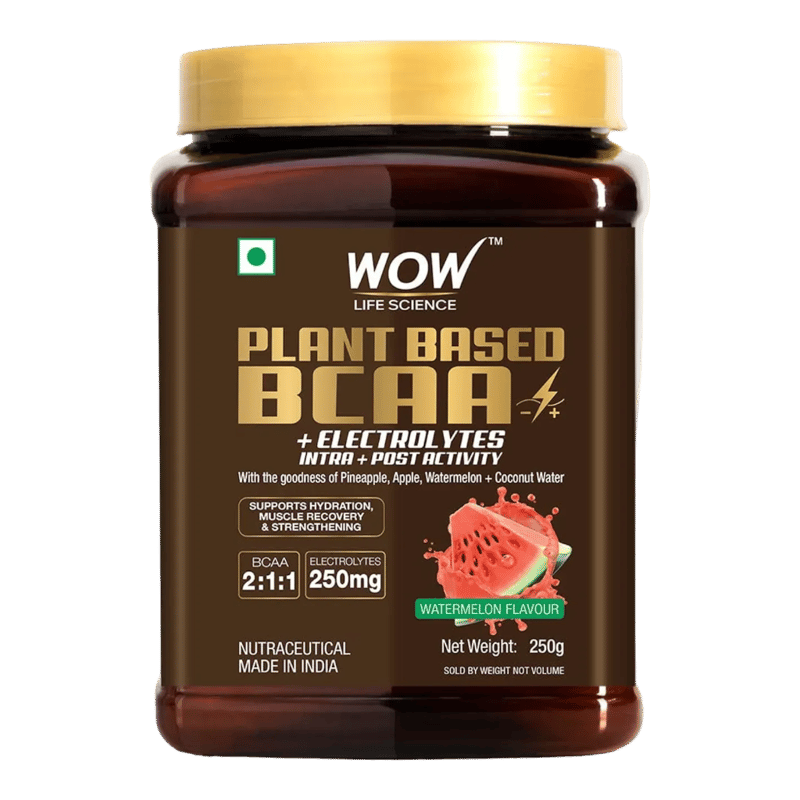
Branched-chain amino acids (leucine, isoleucine, and valine) trigger muscle protein synthesis. That's science, not marketing. Your muscles need these three amino acids in a specific ratio — ideally 2:1:1 — to recover efficiently after workouts.
Plant-based BCAAs work just as effectively as animal-derived ones because amino acids are amino acids. Your muscles can't tell the difference. What matters is the ratio, the total amount, and when you consume them.
Shop: Watermelon Plant-Based BCAA Powder Accelerate Muscle Recovery → →
For those training in Indian heat, timing matters even more. BCAAs taken 30 minutes before exercise help prevent muscle breakdown during intense workouts. Post-workout, they accelerate recovery by signaling your body to start rebuilding.
Synergistic Ingredients: Why Combinations Beat Solo Acts

Your body is complex. Nutrients rarely work alone. Vitamin D needs magnesium to convert into its active form. Iron absorbs better with vitamin C. Calcium competes with magnesium for absorption. This is nutrient synergy, and it's why multivitamins aren't just random vitamin cocktails.
Gender-Specific Formulations: Real Science
Men and women have different nutritional needs. This isn't controversial — it's biology. Men need more zinc for testosterone production and prostate health. Women need more iron due to menstruation. Men benefit from higher B-vitamin levels for energy metabolism because they typically have more muscle mass.
Quality men's multivitamins account for these differences. They're not just marketing gimmicks. They provide targeted support for male-specific health concerns: cardiovascular health, muscle maintenance, energy production, and hormonal balance.
What Your Body Actually Needs
The "one-size-fits-all" approach to supplements fails because biochemistry varies. Your age, activity level, diet, stress levels, and even genetics affect what you need. This is why paying attention to how you feel matters more than blindly following label directions.
Key Takeaways: Making Science Work For You
Smart supplementation isn't about buying everything on the shelf. It's about understanding what your body needs and choosing formulations that actually deliver. Here's what matters most:
Bioavailability beats quantity — 500mg that absorbs well trumps 1000mg that doesn't
Timing affects results — Fat-soluble vitamins with meals, water-soluble on empty stomach
Consistency matters more than perfection — Daily use for 8-12 weeks shows real results
Quality formulations consider ingredient interactions — Good supplements enhance absorption; poor ones create nutrient competition
Plant-based can equal animal-based — When properly formulated with complete amino acid profiles
Triple strength means fewer pills — Concentrated formulations improve compliance and reduce digestive discomfort
Remember, supplements supplement. They don't replace whole foods, sleep, or stress management. But when chosen wisely and used consistently, they fill real nutritional gaps that modern life creates.
Enjoyed this article?
Get more beauty tips and skincare guides delivered to your inbox.
Related Articles

WOW Science: What Most People Miss About Supplement Formulas
Most people buy supplements based on dosage numbers alone, missing the crucial science behind formulation. WOW Science explains why bioavailability and ingredient synergy matter more than milligrams on a label.

wow science: What Most People Miss About Supplements
Most supplements aren't working as promised. The wow science of bioavailability and absorption rates reveals why your multivitamin might be failing you—and what actually works.

Omega 3 Capsules: What Most People Miss About Quality
That 1000mg fish oil capsule? You might only be getting 300mg of actual omega 3s. Discover the hidden truth about dosage and quality that supplement brands don't advertise.