
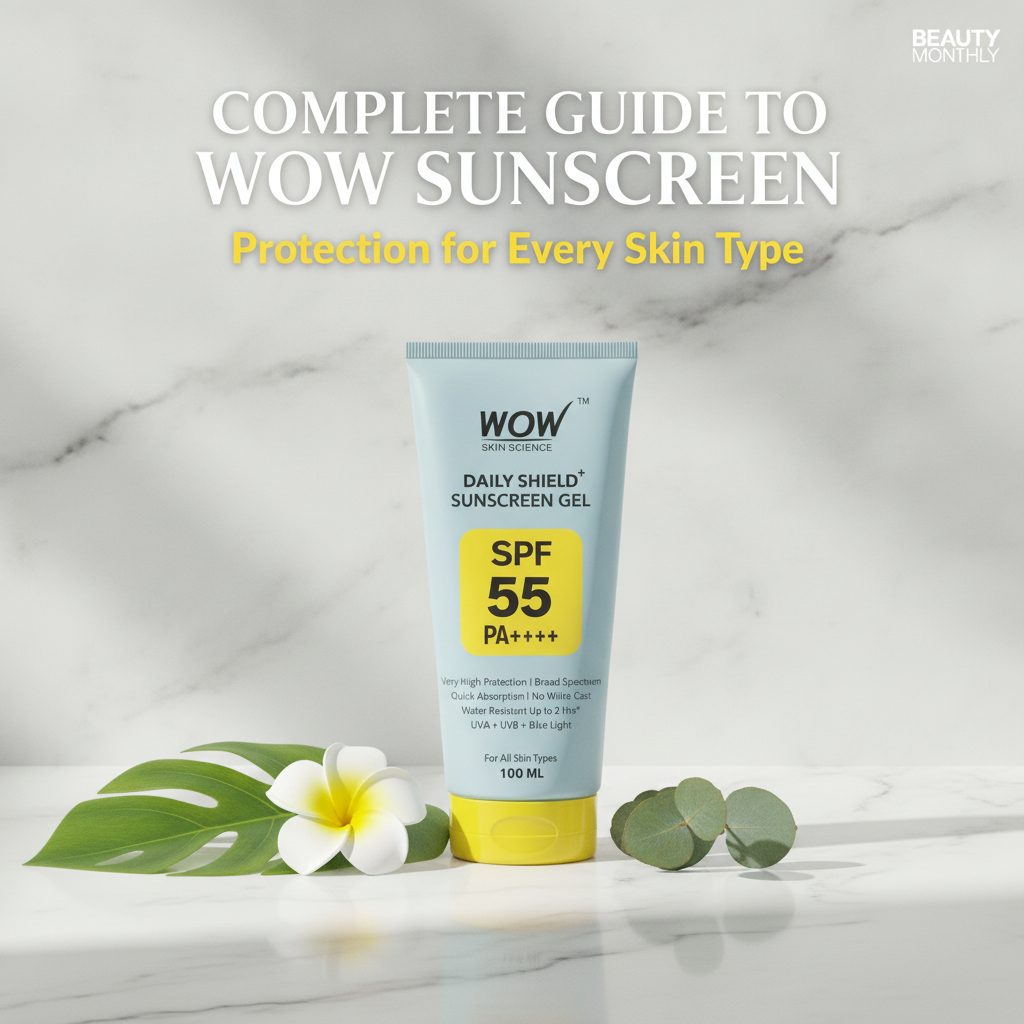
Complete Guide to WOW Sunscreen: Protection for Every Skin Type
Daily sunscreen is your most effective anti-aging step. Learn how WOW sunscreen protects against UV damage, prevents wrinkles and dark spots, and why it's essential for every skin type — even indoors.
Garima
WOW Editorial Team
Complete Guide to WOW Sunscreen: Protection for Every Skin Type
Your skin faces a silent threat every single day. UV rays penetrate through clouds, bounce off buildings, and sneak through windows — even when you're indoors. Dermatologists agree: daily sunscreen is the single most effective anti-aging step you can take. Yet most of us skip it or apply it wrong.
Here's the truth. Sunscreen isn't just for beach days. It's your daily armor against premature wrinkles, dark spots, and serious skin damage. The good news? Finding the right sunscreen for your skin type doesn't have to be complicated.
Why Sunscreen Is Your Skin's Best Defense
Understanding UV Damage and Skin Health
The sun emits two types of harmful rays that reach your skin. UVB rays cause sunburn — that's the immediate damage you can see and feel. UVA rays are sneakier. They penetrate deeper, breaking down collagen and causing wrinkles, sagging, and dark spots that show up years later.
Studies show that up to 80% of visible aging comes from sun exposure, not genetics. Those fine lines around your eyes? The uneven tone on your cheeks? Sun damage accounts for most of it. Daily sunscreen can prevent up to 90% of these changes.
Indian skin, despite having more melanin, isn't immune. We're actually more prone to hyperpigmentation and melasma from sun exposure. That stubborn dark spot that won't fade? UV rays keep making it darker every time you step outside.
The WOW Skin Science Approach to Sun Protection
Here's what works really well: formulas that protect without the greasy residue or white cast that makes you want to skip sunscreen altogether. Modern sunscreens should feel invisible on your skin while delivering serious protection.
The focus should be on lightweight textures that work with Indian humidity, broad-spectrum coverage that blocks both UVA and UVB rays, and formulas that layer well under makeup. Your sunscreen shouldn't feel like a mask — it should feel like nothing at all.
Decoding SPF, PA Ratings, and Sunscreen Technology
What SPF Numbers Really Mean
SPF measures protection against UVB rays only. The numbers tell you how much longer you can stay in the sun before burning. SPF 30 blocks about 97% of UVB rays. SPF 50 blocks 98%. SPF 55 blocks slightly more at 98.2%.
The jump from SPF 30 to 50 matters more than SPF 50 to 100. But here's the catch: these numbers assume you're applying the full recommended amount. Most people use only 25-50% of what they should, which dramatically reduces protection.
For Indian summers and outdoor activities, SPF 50+ offers the buffer you need. Even if you under-apply slightly, you're still getting decent protection.
PA Ratings Explained: Your Shield Against UVA
PA ratings measure UVA protection — the rays that cause aging and pigmentation. More plus signs mean better protection:
PA+: Some UVA protection
PA++: Moderate UVA protection
PA+++: High UVA protection
PA++++: Extremely high UVA protection
For daily wear, especially if you struggle with dark spots or melasma, PA++++ gives you the strongest defense. This rating means the product can delay UVA-induced skin darkening by 16 times or more.
Broad-Spectrum Protection
Broad-spectrum sunscreens protect against both UVA and UVB rays. This is non-negotiable. A high SPF without UVA protection leaves your skin vulnerable to aging and pigmentation.
Look for products that clearly state "broad-spectrum" on the label. This ensures you're getting complete coverage, not just burn protection.
Choosing the Right Sunscreen for Your Skin Type
Best Sunscreen for Oily and Acne-Prone Skin
Oily skin needs lightweight, non-comedogenic formulas that won't clog pores. Matte finishes work beautifully because they control shine while protecting. Gel-based formulas absorb quickly without leaving residue.
The WOW Matte Sunscreen SPF 35 PA++ offers broad-spectrum protection with a pollution shield. It dries down to a velvety matte finish that actually helps control oil throughout the day. Perfect for humid weather when your face feels like it's melting by noon.
Shop: WOW Matte Sunscreen SPF 35 PA++ → →
Sunscreen Solutions for Dry and Sensitive Skin
Dry skin craves hydration alongside protection. Look for gel formulas that provide moisture without heaviness. Your sunscreen should soothe, not irritate or leave your skin feeling tight.
Sensitive skin needs gentle formulas free from harsh chemicals and fragrances. Water-resistant options help the product stay put without requiring frequent reapplication that might irritate delicate skin.
Universal Protection for All Skin Types
Some formulas genuinely work for everyone. These combine lightweight textures with powerful protection and no white cast. They layer well under makeup and feel comfortable for 8+ hours.
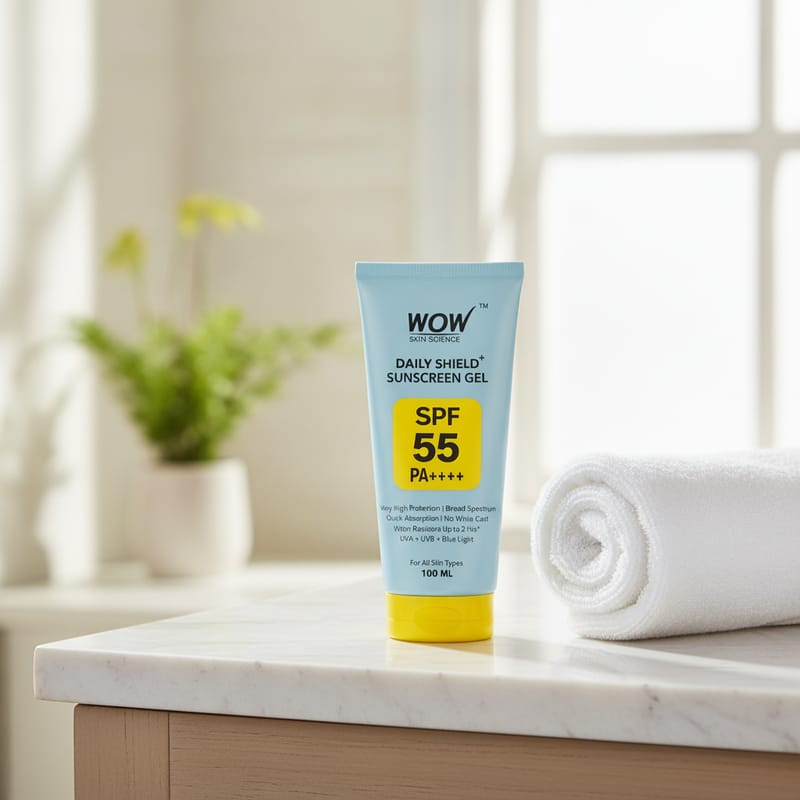
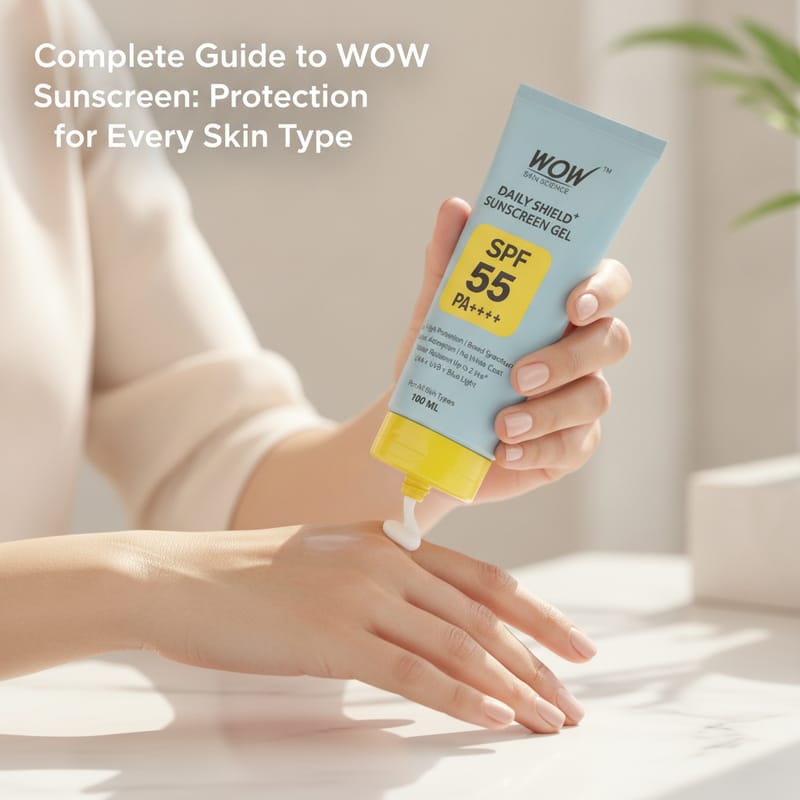
The Daily Shield Sunscreen Gel SPF 55 PA++++ delivers maximum protection in a quick-absorbing, non-greasy formula. It's water-resistant and leaves zero white cast — crucial for Indian skin tones. Whether you're indoors or outdoors, this level of protection has you covered.
Shop: Daily Shield Sunscreen Gel SPF 55 PA++++ → →
How to Apply Sunscreen Correctly
The Two-Finger Rule and Proper Coverage
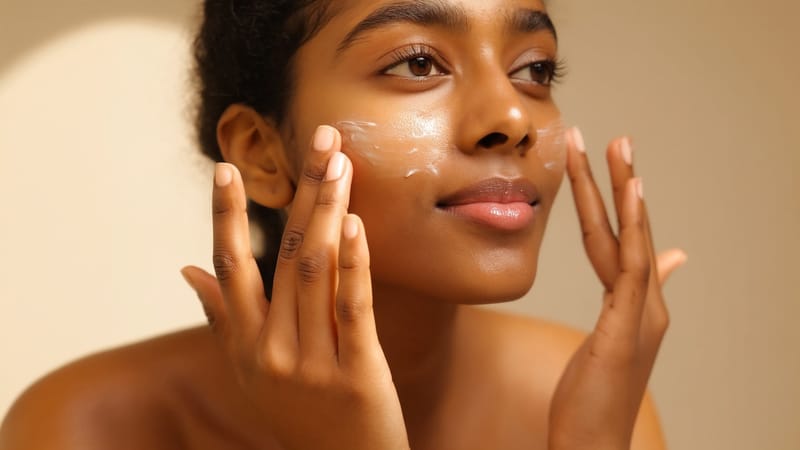
Use two full finger-lengths of sunscreen for your face and neck. This equals about ¼ teaspoon. Yes, it seems like a lot. That's because it is — and it's what you need for the SPF on the label to actually work.
Apply in dots across your forehead, cheeks, nose, and chin. Blend outward and upward. Don't forget your neck, ears, and the back of your hands. These areas show aging first.
Layering Sunscreen with Skincare and Makeup
Sunscreen goes on as the last step of your skincare routine, after moisturizer and before makeup. Wait 15 minutes for it to absorb fully before applying foundation.
Most makeup with SPF doesn't provide enough protection on its own. You'd need to apply 7 times the normal amount of foundation to get the stated SPF. Always use dedicated sunscreen underneath.
Reapplication Guidelines for All-Day Protection
Reapply every 2 hours if you're outdoors or sweating. For indoor days, one morning application usually suffices unless you're near windows. Water-resistant formulas give you 40-80 minutes of protection while swimming or sweating heavily.
Keep a small tube in your bag for touch-ups. If you're wearing makeup, use a powder sunscreen or setting spray with SPF for easy reapplication.
Common Sunscreen Mistakes and How to Avoid Them
Why Your Sunscreen Might Not Be Working
The biggest mistake? Not using enough. That expensive SPF 50 you bought? It's working like SPF 15 if you're only applying half the amount.
Skipping cloudy days is another major error. Up to 80% of UV rays penetrate clouds. Your skin is getting damaged even when the sun isn't visible.
Forgetting your neck, ears, and hands ages you faster. These areas have thinner skin and show damage quickly. My grandmother always said, "Your hands tell your real age" — she was right.
Myth-Busting: Sunscreen Edition
Myth: Dark skin doesn't need sunscreen. Truth: While melanin offers some protection (about SPF 13), it's not enough. Dark skin is still vulnerable to skin cancer, hyperpigmentation, and aging.
Myth: Indoor workers don't need daily sunscreen. Truth: Windows block UVB but not UVA rays. If you sit near a window, you're getting UVA exposure that causes aging and dark spots.
Myth: Sunscreen in moisturizer or makeup is sufficient. Truth: You'd need to apply 7 times the normal amount to get the stated SPF. Always use dedicated sunscreen.
Myth: Water-resistant means waterproof. Truth: No sunscreen is truly waterproof. Water-resistant formulas last 40-80 minutes in water, then need reapplication.
Enjoyed this article?
Get more beauty tips and skincare guides delivered to your inbox.
Related Articles

The Complete Guide to Body Cupid Perfume by WOW
Body Cupid by WOW Skin Science offers salon-quality perfumes at affordable prices for Indian consumers. From long-lasting EDPs to refreshing body mists, find fragrances that work in our climate.
The Complete Guide to Body Cupid Perfume by WOW Skin Science
Body Cupid perfumes from WOW Skin Science offer quality fragrances designed for real life. Discover affordable EDPs and body mists that create lasting impressions without breaking the bank.
The Complete Guide to Cupid Products for Every Mood
Cupid products offer complete fragrance wardrobes with multiple scents at affordable prices. Learn how these versatile collections let you match your perfume to your mood, outfit, or occasion.