
Sensitive Skin SOS: 7 Gentle Ingredients That Work
Nearly 70% of women experience sensitive skin. Learn the signs of sensitivity and discover 7 gentle ingredients that actually soothe and strengthen your skin barrier.
WOW Skin Science Editorial Team
Beauty experts sharing science-backed skincare tips.
Sensitive Skin SOS: 7 Gentle Ingredients That Work
Your skin burns at the slightest touch of a new product. Redness appears out of nowhere. That expensive serum everyone raves about? It left you looking like a tomato. Sound familiar?
You're not alone. Nearly 70% of women report having sensitive skin at some point. The good news? Once you understand what your skin actually needs, managing sensitivity becomes much simpler.
Understanding Sensitive Skin: Signs, Triggers, and Common Mistakes
Sensitive skin isn't just about occasional irritation. It's your skin's way of saying its protective barrier needs help. Think of your skin barrier like a brick wall — when the mortar between bricks weakens, irritants sneak through easily.
5 Tell-Tale Signs You Have Sensitive Skin
Here's what dermatologists look for when diagnosing sensitivity:
Immediate reactions — Your skin stings, burns, or itches within minutes of applying products
Visible redness — Patches of red appear randomly, especially on cheeks and nose
Tight, dry feeling — Even after moisturizing, your skin feels stretched
Rough texture — Small bumps or uneven patches that won't go away
Weather sensitivity — Your skin freaks out during season changes
My own sensitive skin journey started during a particularly harsh Delhi summer. Every product I tried made things worse until I learned to decode what my skin was actually telling me.
Common Triggers That Irritate Sensitive Skin
Living in India presents unique challenges for sensitive skin. Our humid climate, pollution levels, and hard water create the perfect storm for irritation.
The biggest culprits include:
Environmental triggers:
Dust and pollution particles
Sudden temperature changes (hello, AC to outdoor heat!)
Hard water with high mineral content
UV exposure without proper protection
Product-related triggers:
Fragrances (even "natural" ones)
Alcohol-based toners
Harsh surfactants in cleansers
Essential oils in high concentrations
Mistakes That Make Sensitivity Worse
We often damage our skin while trying to help it. These well-meaning mistakes can turn minor sensitivity into major irritation:
Over-cleansing strips away natural oils. Washing your face more than twice daily actually increases sensitivity. Your skin produces more oil to compensate, creating a vicious cycle.
Product hopping confuses your skin. Testing new products every week prevents your barrier from healing. Give each product at least 4 weeks before judging results.
Skipping sunscreen because it "irritates" leaves skin vulnerable. UV damage weakens your barrier further. The trick is finding the right formula, not avoiding protection.
The Science Behind Gentle Skincare: Why These 7 Ingredients Work
Understanding how gentle ingredients work helps you make smarter choices. Your skin barrier consists of lipids (fats) that hold skin cells together like cement between bricks. When this barrier weakens, water escapes and irritants enter.
How Gentle Ingredients Repair Your Skin Barrier
Effective ingredients work in three ways:
Replenish lost lipids — Ingredients like ceramides fill gaps in your barrier
Reduce inflammation — Anti-inflammatory compounds calm irritated skin
Lock in moisture — Humectants and occlusives prevent water loss
The best part? These ingredients work synergistically. Using them together creates better results than any single ingredient alone.
The pH Factor: Why It Matters for Sensitive Skin
Your skin's natural pH hovers around 5.5 — slightly acidic. This acidity protects against harmful bacteria and maintains barrier function.
Many cleansers have pH levels of 8-10, disrupting this delicate balance. When pH rises, your barrier weakens. Bacteria multiply. Irritation follows.
Look for products with pH between 4.5-6.5. Your sensitive skin will thank you.
7 Hero Ingredients for Sensitive Skin (With Scientific Backing)

After years of research and personal testing, these seven ingredients consistently deliver results without irritation.
1. Centella Asiatica: The Healing Powerhouse
Known as "tiger grass" or "gotu kola" in Ayurveda, this herb has been healing wounds for centuries. Modern research confirms what ancient healers knew — centella is incredibly soothing.
How it works: Contains madecassoside and asiaticoside compounds that boost collagen production and reduce inflammation. Studies show 1% centella extract can reduce redness by 30% in just two weeks.
Best for: Post-acne marks, general redness, compromised barriers
What to look for: Products with at least 0.5% centella extract or "CICA" on the label
2. Ceramides: Your Barrier's Best Friend
Ceramides make up 50% of your skin barrier. Think of them as the mortar between skin cell bricks. Sensitive skin often lacks adequate ceramides.
How they work: Fill gaps in your barrier, preventing water loss and irritant entry. Clinical studies show 2% ceramide creams can restore barrier function in 4 weeks.
Best for: Dry patches, flaking, general sensitivity
What to look for: Ceramide NP, AP, or EOP on ingredient lists
3. Niacinamide: The Multi-Tasking Marvel
Don't let the chemical name scare you — niacinamide (vitamin B3) is one of the gentlest actives available. It tackles multiple concerns without irritation.
How it works: Strengthens barrier function, reduces inflammation, and regulates oil production. Research shows 4% niacinamide is as effective as 10% for most benefits.
Best for: Redness, uneven tone, mild acne
What to look for: 2-5% concentration for sensitive skin
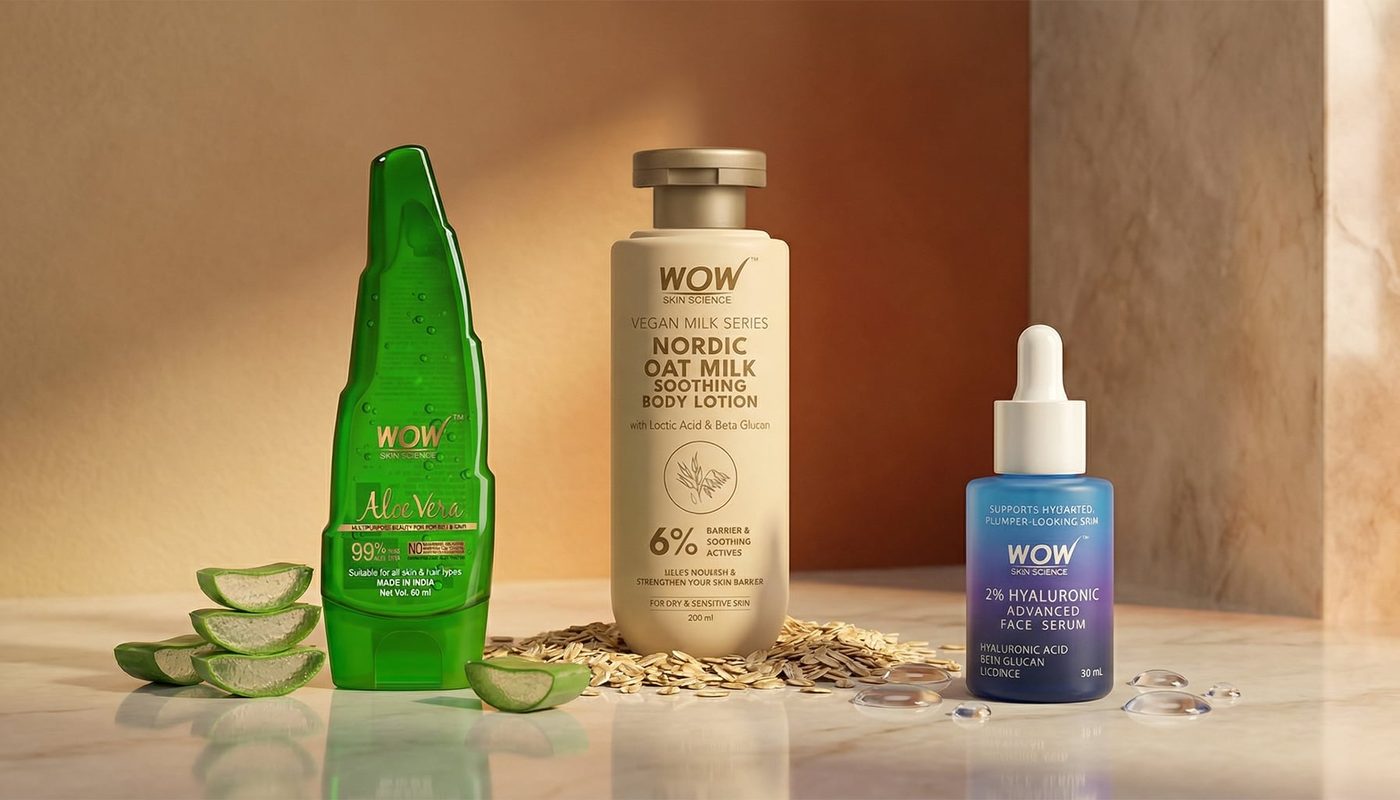
4. Colloidal Oatmeal: Nature's Soother
Your grandmother was right about oatmeal baths. Colloidal oatmeal (finely ground oats) contains avenanthramides — powerful anti-inflammatory compounds.
How it works: Forms protective film on skin, reduces itching, and restores barrier function. FDA-approved for treating eczema and dermatitis.
Best for: Extreme dryness, itching, eczema-prone skin
What to look for: "Avena sativa (oat) kernel extract" on labels
5. Hyaluronic Acid: Gentle Hydration Hero
Despite the scary name, hyaluronic acid is actually a sugar molecule your body produces naturally. It holds 1000 times its weight in water.
How it works: Draws moisture from environment into skin without clogging pores. Multiple molecular weights penetrate different skin layers.
Best for: Dehydration, fine lines, post-procedure care
What to look for: Products with multiple molecular weights for best results
6. Aloe Vera: The Cooling Comforter
Every Indian household knows aloe's cooling properties. Modern science backs this traditional remedy — aloe contains over 75 active compounds.
How it works: Polysaccharides in aloe create protective barrier while vitamins A, C, and E provide antioxidant protection. Anti-inflammatory compounds reduce redness instantly.
Best for: Sunburn, heat rash, general irritation
What to look for: At least 10% aloe vera gel or juice
7. Green Tea Extract: Antioxidant Protection
Green tea isn't just for drinking. Its polyphenols, especially EGCG, provide powerful antioxidant and anti-inflammatory benefits.
How it works: Neutralizes free radicals from pollution and UV exposure. Reduces inflammation markers by up to 40% in studies.
Best for: Environmental protection, anti-aging, redness
What to look for: Camellia sinensis leaf extract in top half of ingredient list
Building Your Sensitive Skin Routine: A Step-by-Step Guide
Creating an effective routine means understanding timing and layering. Here's what works for most sensitive skin types:
Morning Routine for Sensitive Skin
Keep mornings simple. Your skin doesn't need heavy cleansing after a night's rest.
Gentle rinse — Plain water or micellar water removes overnight buildup
Hydrating toner — Look for centella or hyaluronic acid
Lightweight serum — Niacinamide works beautifully here
Moisturizer — Choose ceramide-rich formulas
Sunscreen — Mineral formulas with zinc oxide suit sensitive skin best
Pro tip: Wait 30 seconds between steps. This prevents pilling and improves absorption.
Evening Routine for Maximum Repair
Nighttime is when your skin repairs itself. Support this natural process with targeted ingredients.
Oil cleanser — Removes sunscreen and makeup gently
Water-based cleanser — pH-balanced formula to deep clean
Treatment serum — Alternate between centella and green tea
Rich moisturizer — Layer ceramides and colloidal oatmeal
Facial oil (optional) — Seal everything with rosehip or squalane
Remember: More products don't equal better results. Consistency beats complexity every time.
Weekly Treatments That Won't Irritate
Sensitive skin can handle gentle treatments. The key is choosing wisely:
Twice weekly: Colloidal oatmeal mask for deep hydration Once weekly: Gentle enzyme exfoliant (avoid physical scrubs) As needed: Aloe vera gel mask for flare-ups
Ingredients to Avoid: The Sensitive Skin No-Go List
Knowing what to avoid matters as much as knowing what to use. These common ingredients spell trouble for sensitive skin:
Common Irritants Hidden in 'Gentle' Products
Marketing claims can be misleading. "Natural" doesn't mean gentle. "Dermatologist-tested" doesn't guarantee suitability for sensitive skin.
The worst offenders:
Fragrance/Parfum — Even in "unscented" products
Denatured alcohol — Listed as SD alcohol or ethanol
Sodium lauryl sulfate — Harsh cleanser that strips skin
Essential oils — Especially citrus and mint oils
Chemical sunscreens — Oxybenzone and octinoxate often irritate
Retinol — Too strong for most sensitive skin types
Benzoyl peroxide — Extremely drying and irritating
How to Read Labels Like a Pro
Understanding ingredient lists empowers better choices. Ingredients appear in descending order by concentration.
Red flags to spot:
Fragrance in top 5 ingredients
Multiple preservatives
Long lists of plant extracts
"Active" ingredients above 5%
Green flags to seek:
Short, simple ingredient lists
Barrier-supporting ingredients in top 5
pH information on packaging
"Fragrance-free" (not just "unscented")
Key Takeaways: Your Sensitive Skin Action Plan
Quick Reference: The 7 Gentle Ingredients
Keep this list handy when shopping:
Centella Asiatica — Healing and soothing
Ceramides — Barrier repair
Niacinamide — Multi-benefit without irritation
Colloidal Oatmeal — Intense soothing
Hyaluronic Acid — Gentle hydration
Aloe Vera — Instant cooling relief
Green Tea Extract — Environmental protection
Your 30-Day Sensitive Skin Challenge
Transform your skin with this simple plan:
Week 1: Strip routine to basics — gentle cleanser, moisturizer, sunscreen only Week 2: Add one treatment ingredient (suggest starting with ceramides) Week 3: Introduce second ingredient if skin tolerates first well Week 4: Evaluate results and adjust
Track your progress with photos and notes. Small improvements compound over time.
Frequently Asked Questions About Sensitive Skin Care
Can I use vitamin C if I have sensitive skin?
Yes, but choose wisely. L-ascorbic acid often irritates at standard 15-20% concentrations. Try gentler forms like sodium ascorbyl phosphate or magnesium ascorbyl phosphate at 10% or less. Always patch test first.
How long does it take to see results with gentle ingredients?
Patience pays off. Initial calming happens within days, but barrier repair takes 4-6 weeks minimum. Full transformation requires 2-3 months of consistent use. Don't give up too soon!
Should I patch test every new product if I have sensitive skin?
Absolutely. Apply small amount behind your ear or inner wrist. Wait 24-48 hours before full-face application. This simple step prevents major reactions.
Can sensitive skin become normal skin over time?
Sometimes yes! Proper care can strengthen your barrier enough to tolerate previously irritating ingredients. However, some people have genetically sensitive skin that requires lifelong gentle care.
Is it safe to mix multiple gentle ingredients in one routine?
Generally yes. The ingredients listed work synergistically. Start with 2-3 ingredients and gradually build. Watch for signs of overload like increased sensitivity or breakouts.
Your sensitive skin journey doesn't have to be frustrating. Armed with the right knowledge and ingredients, you can achieve the calm, healthy complexion you deserve. Start simple, stay consistent, and let these gentle heroes work their magic.
Enjoyed this article?
Get more beauty tips and skincare guides delivered to your inbox.
Related Articles
ଆଲୋ ଭେରା ଜେଲ ସୂର୍ଯ୍ୟାଘାତ ଚର୍ମ ପାଇଁ ସତ୍ୟିଅଛି ଭଲ? ବିଜ୍ଞାନ ବ୍ୟାଖ୍ୟା
ସୂର୍ଯ୍ୟାଘାତ ପରେ ଆଲୋ ଭେରା ବ୍ୟବହାର କରିଛନ୍ତି? ବିଜ୍ଞାନ ଏହି ପୁରାତନ ଉପଚାରକୁ ସମର୍ଥନ କରେ। ଆଲୋ ଭେରା କିଭାବେ UV-ଦ୍ୱାରା ଖରାପ ଚର୍ମକୁ ଶାନ୍ତ କରେ ଏବଂ ଏହାକୁ ସଠିକ ଭାବେ ବ୍ୟବହାର କରିବେ ତାହା ଏଠାରେ ଦେଖନ୍ତୁ।
શું એલોવેરા જેલ સૂર્યાળમાં બળેલી ત્વચા માટે ખરેખર સારું છે? વિજ્ઞાન સમજાયું
સૂર્યાળ પછી એલોવેરા તરફ જોયું? વિજ્ઞાન આ પ્રાચીન ઉપચારને સમર્થન આપે છે. એલોવેરા UV-નુકસાન પહોંચેલી ત્વચાને કેવી રીતે શાંત કરે છે અને તેનો સાચો ઉપયોગ કેવી રીતે કરવો તે જાણો.
അലോ വെരയ ജെൽ സത്യത്തിൽ സൂര്യാഘാതമേറ്റ ത്വചയ്ക്ക് നല്ലതാണോ? ശാസ്ത്രം വിശദീകരിച്ചത്
സൂര്യാഘാതത്തിനുശേഷം അലോ വെരയിലേക്ക് തിരിഞ്ഞിട്ടുണ്ടോ? ഈ പ്രാചീന പരിഹാരത്തെ ശാസ്ത്രം യഥാർത്ഥത്തിൽ പിന്തുണയ്ക്കുന്നു. അലോ വെരയ UV-നുകസാനമേറ്റ ത്വചയെ എങ്ങനെ ശാന്തമാക്കുന്നുവെന്നും അത് ശരിയായി ഉപയോഗിക്കുന്നതെങ്ങനെയെന്നും കണ്ടെത്തുക.