
Black Marks on Face: Causes and What Fades Them
Those dark spots left by pimples and sun can fade, but only if you pick the right ingredients and wear sunscreen every single day.
Garima
WOW Editorial Team
TITLE: Black Marks on Face: Causes and What Fades Them
Black marks on face are usually patches of extra melanin left behind by pimples, sun exposure, picking or hormones. Most fade over weeks to months with gentle exfoliation, spot-fading ingredients like niacinamide and alpha arbutin, and daily SPF. Deep, spreading or sudden patches need a dermatologist.
The good news is that most of these marks sit in the upper layers of skin and respond to a steady routine. The catch is patience, and protecting your skin from the sun while they fade.
What causes black marks on face?
Indian skin makes melanin readily. That protects you from the sun, but it also means skin darkens quickly after any irritation.
The common causes:
Pimple marks: a pimple heals, but the inflammation leaves a brown or black spot behind. This is called post-inflammatory hyperpigmentation, and it is the most common reason.
Sun spots: years of unprotected sun create flat brown spots, usually on the cheeks, forehead and nose.
Picking and squeezing: pressing a pimple or blackhead pushes inflammation deeper, so the mark lasts longer.
Melasma: symmetrical brown patches on cheeks, upper lip or forehead, often linked to hormones, pregnancy or certain medicines, and worsened by sun and heat.
Friction and hair removal: threading, waxing, shaving or rubbing a mask strap can darken the skin on the upper lip, chin and jawline.
Why do marks look darker after the monsoon?
Post-monsoon, the sun comes back strong while the air is still humid. Humidity brings breakouts, and every breakout can leave a fresh mark.
Festive season adds its own load: heavy makeup for long hours, late nights, oily food and skipped cleansing. Spending time outdoors for pujas, shopping and celebrations without reapplying sunscreen darkens existing marks fast.
Do black marks go away on their own?
Many pimple marks fade on their own over several months, provided you stop new breakouts and protect them from sun. Deeper or older marks can take much longer.
Sun exposure undoes progress. Even a few unprotected days can darken a spot that was fading, which is why sunscreen matters more than any single cream.
Which ingredients help fade black marks?
Look for these on the label rather than words like "whitening" or "instant":
Niacinamide: helps reduce the look of dark spots and supports the skin barrier. Gentle enough for most skin types.
Alpha arbutin: helps slow down excess melanin, so spots look lighter over time.
Vitamin C: an antioxidant that helps brighten dull, uneven skin.
Salicylic acid: clears oil and dead skin from pores, which helps reduce the breakouts that cause new marks. Best for oily and acne-prone skin.
Retinol: speeds up skin renewal so marks fade faster. Start slowly, use only at night, and avoid during pregnancy.
Broad-spectrum SPF 30 or higher: daily sunscreen is widely recommended for anyone dealing with dark marks. Without it, the other ingredients struggle to show results.
Is there a black marks removal cream for face that works?
No cream erases marks overnight or permanently. A good product helps fade their look gradually, usually over 8 to 12 weeks of regular use.
Choose products with a full ingredient list and one or two of the actives above. Avoid unlabelled creams sold as quick fixes, and never use steroid creams on your face unless a doctor has prescribed them, as they can thin and damage skin.
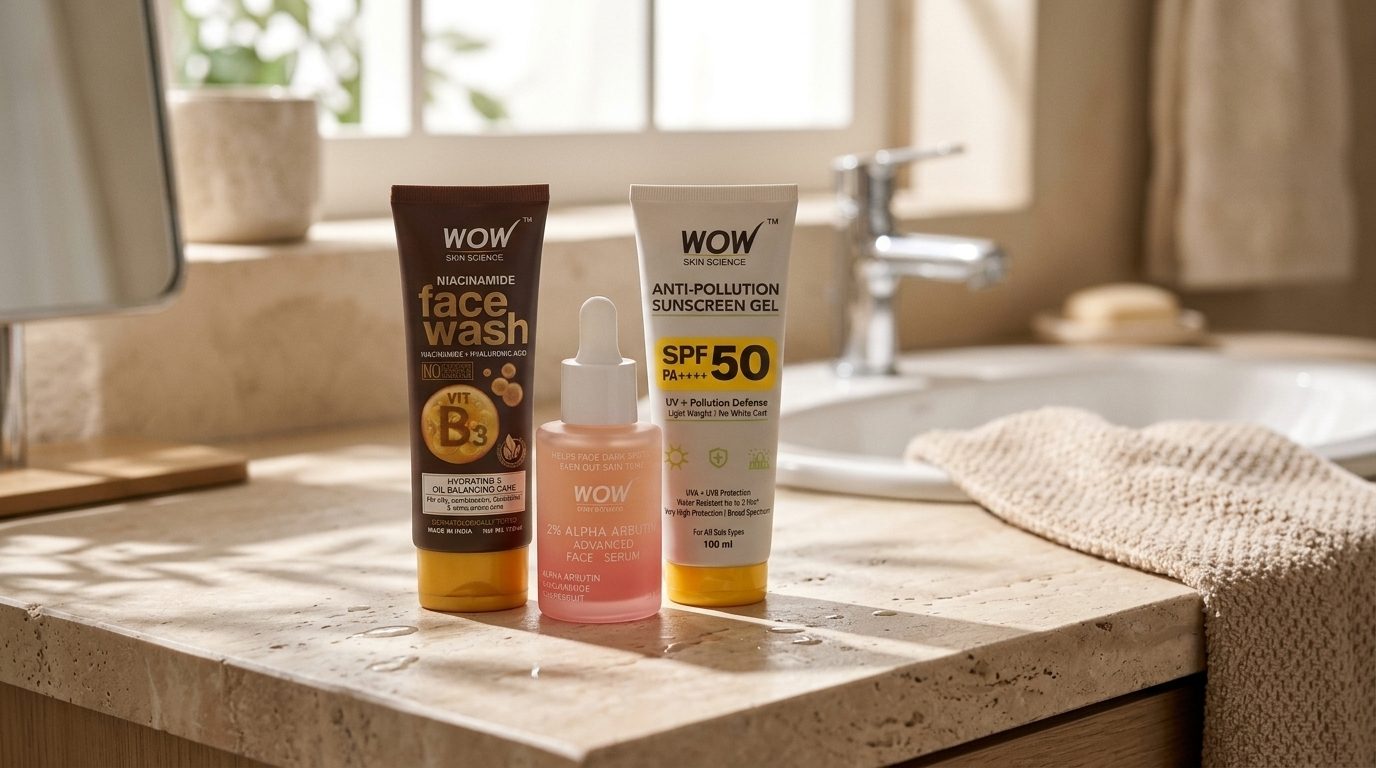
A combination works better than one cream on its own. The WOW Skin Science Spot-Fade & Protect Kit pairs a niacinamide face wash, an alpha arbutin serum and an SPF 50 sunscreen, covering cleansing, fading and protection in one routine.
A simple routine to fade black marks
Morning
Wash with a gentle face wash, about 30 seconds.
Apply a spot-fading serum such as niacinamide or alpha arbutin on the whole face, not just the spots.
Moisturise with a light gel or lotion.
Apply sunscreen generously (two finger lengths for face and neck). Reapply every 2 to 3 hours if you are outdoors.
Night
Remove makeup and sunscreen first, then cleanse.
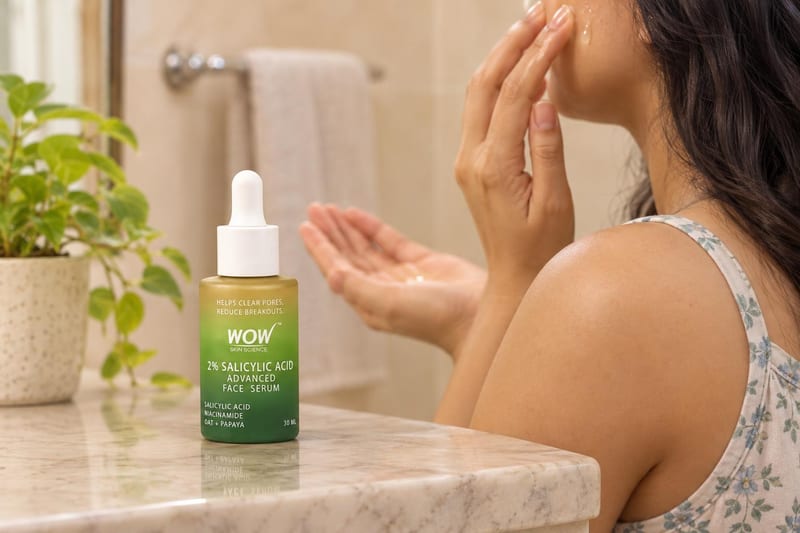
If you have oily or acne-prone skin, use a serum like the WOW Skin Science Advanced 2% Salicylic Acid Face Serum 3 to 4 nights a week to keep pores clear.
On other nights, use your fading serum or a retinol product, never both acids and retinol on the same night when starting out.
Finish with moisturiser.
Patch test every new product on your inner arm or behind the ear for 24 to 48 hours. If you want a festive glow-up at home before a function, a gentle weekly pampering step is fine, but keep your daily routine going alongside it.
What should you avoid?
Lemon juice, baking soda or toothpaste: they irritate skin and can make marks darker.
Harsh scrubs: rubbing inflames skin and triggers more pigment.
Picking pimples: the single fastest way to create a new mark.
Frequent bleaching: it can irritate and dry skin without fading marks.
Mixing too many actives: more is not faster. Irritation means more darkening.
When should you see a dermatologist?
See a dermatologist if a patch is spreading, raised, itchy, bleeding, or changing in colour or shape. Also go if marks have not improved after three months of a consistent routine.
Melasma, marks during pregnancy, or pigmentation while you are on medication need a doctor's guidance. A dermatologist can also suggest in-clinic options if home care is not enough.
Quick answers
How long do black marks take to fade?
Mild pimple marks often fade in 6 to 12 weeks with regular care and sunscreen. Deeper or older marks can take several months.
Can I use a black marks cream in humid weather?
Yes. Pick light serums and gel moisturisers instead of heavy creams, so pores stay clear.
Is niacinamide or alpha arbutin better for black marks?
Both help. Niacinamide suits most skin and supports the barrier, while alpha arbutin targets pigment more directly. Many routines use both.
Can sunscreen alone fade black marks?
Sunscreen stops marks from getting darker and lets them fade naturally. Adding a fading serum usually speeds things up.
Black marks fade with gentle care, the right ingredients and patience, not with harsh quick fixes. Stop new breakouts, wear sunscreen daily, and give your routine at least eight weeks.
Enjoyed this article?
Get more beauty tips and skincare guides delivered to your inbox.
By subscribing you agree to receive emails from BuyWOW. Unsubscribe anytime.
Related Articles
Fade Dark Spots Naturally: Hyperpigmentation Solutions
Aloe, curd, besan or lemon? Here is which kitchen remedies for dark spots are worth your time, and which can leave marks darker than before.
Face Serum: Which One Suits Your Skin Type?
A face serum only works when its ingredient matches your skin, so here is how to pick one for oily, dry or dull skin and use it well.
Moisturiser for an Oily Face: How to Pick One
Skipping moisturiser can leave an oily face feeling tight and still shiny. Here is how to pick a light one that suits humid Indian weather.