
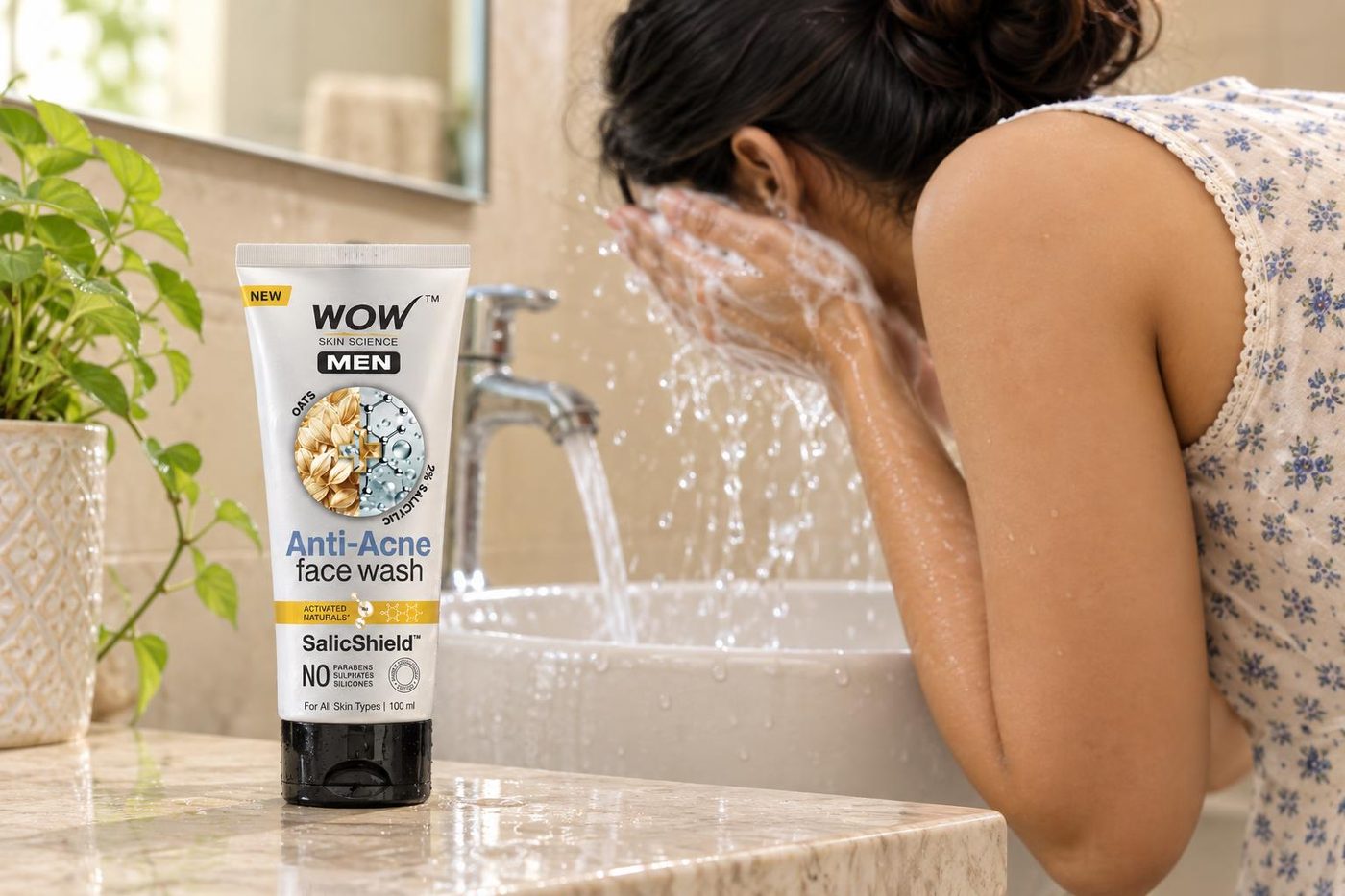
Face Wash Containing Salicylic Acid: How to Choose and Use
How a face wash containing salicylic acid works, who it suits, what strength and texture to pick, and a simple daily routine for oily, acne-prone skin in Indian weather.
Garima
WOW Editorial Team
TITLE: Face Wash Containing Salicylic Acid: How to Choose and Use
A face wash containing salicylic acid is a good everyday choice if your skin is oily, gets blackheads or breaks out easily. Salicylic acid is oil-soluble, so it can work inside pores to loosen oil and dead skin. Pick a gentle formula, use it once or twice a day, and follow with moisturiser and sunscreen.
Below is what it does, who it suits, how to choose one and how to build a simple routine around it. This matters in Indian heat and humidity, where sweat and oil are a daily reality.
What a face wash containing salicylic acid actually does
Salicylic acid is a beta hydroxy acid (BHA). Most exfoliating acids dissolve in water. Salicylic acid dissolves in oil, and that is its main advantage. It can mix with the sebum in your pores and help loosen the plug of oil and dead cells that turns into blackheads and whiteheads.
In a face wash, it helps in three ways:
Gentle exfoliation: it loosens the bonds between dead skin cells on the surface, so skin looks smoother and less dull.
Pore care: it helps keep pores clear, which can help reduce the look of blackheads and congestion over time.
Oil control: combined with cleansing agents, it helps cut excess shine without harsh scrubbing.
A cleanser stays on your skin for under a minute before you rinse it off. So a salicylic acid face wash is milder than a leave-on serum with the same ingredient. That makes it a sensible starting point if you are new to acids.
Who should use a salicylic acid face wash
Oily and combination skin
Oily and combination skin types usually benefit most. If your T-zone shines by afternoon, your nose has blackheads, or you get small bumps on the forehead and chin, a salicylic acid face wash fits naturally into your routine. It works especially well in summer and monsoon, when sweat and humidity make skin feel greasy.
Acne-prone skin
If you get occasional pimples, a BHA cleanser helps keep pores clear and skin clean, which supports clearer-looking skin. It is a helpful daily step, not a cure. Painful, cystic or widespread acne, or acne that leaves dark marks or scars, needs a dermatologist's assessment.
Who should be careful
Dry or sensitive skin: start with a few times a week, not daily, and choose a cream or low-foam formula.
Eczema, rosacea or very reactive skin: acids can sting. Consult a dermatologist before adding one.
Pregnancy or breastfeeding: ask your doctor which skincare ingredients are suitable for you.
Salicylate (aspirin) sensitivity: check with a doctor first.
Prescription skin creams: some prescription acne products already dry the skin. Ask your dermatologist before layering a BHA cleanser on top.
How to choose the right salicylic acid face wash
Concentration
Rinse-off cleansers usually contain salicylic acid somewhere between 0.5% and 2%. Higher is not always better. A lower strength used consistently often suits more people than a stronger wash that leaves skin tight and flaky. Many brands do not list the exact percentage on the front, so check the back label or the product page.
Reading the label
Ingredients are listed roughly from highest to lowest amount. Salicylic acid is effective at low levels, so it often appears in the middle or lower half of the list, and that is normal. What you want to see is the acid clearly named, plus a few hydrating or soothing ingredients, and no harsh scrub particles.
Texture: gel, foam or cream
Gel cleansers suit oily and combination skin and rinse off cleanly.
Foaming face washes feel refreshing and work well in hot, humid weather. Very rich foam can sometimes mean stronger cleansing agents, so watch for tightness after washing.
Cream or low-foam cleansers are kinder to dry or sensitive skin that still gets congested.
Supporting ingredients
Good formulas balance the acid with soothing or hydrating ingredients. Look for oat extract, aloe vera, glycerin, niacinamide, panthenol or green tea. For example, the WOW Skin Science Oat Extract + Salicylic Acid Anti-Acne Face Wash pairs salicylic acid with oat extract, which is known for its skin-comforting properties. If you want to compare textures and actives side by side, you can browse the full face wash range.
Quick checklist before you buy
Salicylic acid listed in the ingredients, ideally with the percentage stated
Texture that matches your skin type and the season
Soothing or hydrating ingredients alongside the acid
No gritty scrub beads, since an acid plus a physical scrub is too much for most skin
A fragrance level you are comfortable with if your skin is sensitive
Face wash vs serum: which salicylic acid step do you need?
Both contain the same ingredient, but they behave differently.
Face wash: short contact, rinsed off, gentle. Best for daily oil control and keeping pores clear. A good first step for most people.
Leave-on serum: stays on the skin, so it is more concentrated in effect. Useful for stubborn blackheads and congestion, but more likely to dry or irritate.
Most people do well starting with the cleanser alone for a few weeks. Add a leave-on step only if you want more help and your skin is tolerating the wash comfortably. Using a strong wash and a strong serum every single day is where irritation usually begins.
How to use a salicylic acid face wash: a simple routine
Step by step
Wet your face with lukewarm water. Very hot water strips the skin.
Take a small amount, about pea to coin size, and lather it between your palms.
Massage gently for 30 to 60 seconds, focusing on oily areas like the nose, forehead and chin. This short contact time gives the acid a chance to work.
Rinse well and pat dry with a clean towel. Do not rub.
Moisturise while skin is still slightly damp. Oily skin needs hydration too; a light gel moisturiser works well.
Morning only: apply sunscreen. Exfoliated skin can be more sensitive to sun, so use SPF 30 or higher every day and reapply if you are outdoors.
How often
Oily skin: once or twice a day usually works. Many people use it at night and a gentler cleanser in the morning.
Combination skin: once a day, or only on oily days.
Dry or sensitive skin: two to three times a week to begin with.
Sample daily routine
Morning: salicylic acid face wash or a gentle cleanser, moisturiser, sunscreen
Night: salicylic acid face wash, a targeted serum if you use one, moisturiser
If you want a stronger leave-on step for stubborn congestion, a serum such as the WOW Skin Science Advanced 2% Salicylic Acid Face Serum can be used a few evenings a week. On those nights, switch to a plain, non-acid cleanser so you are not doubling up.
Pairing with other actives
Niacinamide: generally pairs well and helps with the look of oiliness and uneven tone. If dark marks left behind by old spots bother you, a niacinamide routine such as the WOW Skin Science Spot-Fade & Protect Kit can be used in the morning, with your salicylic acid wash at night.
Retinol: both can be drying. Use them on alternate nights rather than together, and introduce one at a time.
Other acids (AHAs) or scrubs: avoid using them in the same routine. Too much exfoliation weakens the skin barrier.
Common mistakes to avoid
Washing too often. Three or four washes a day leaves skin stripped, and it can end up looking even oilier.
Scrubbing hard. The acid does the exfoliating. Fingertips and light pressure are enough.
Skipping moisturiser. Dehydrated skin often feels tight yet looks shiny.
Stacking too many actives. A BHA wash, a BHA serum, a retinol and a scrub all at once is a fast route to redness and peeling.
Expecting instant results. Pore and texture changes build slowly. Give a new cleanser around four to six weeks of consistent use before judging it.
Ignoring irritation. Mild tingling can be normal at first. Burning, swelling or persistent redness means stop and seek advice.
Best face wash for pimples: what to realistically expect
When people search for the best face wash for pimples, they usually want something that will make breakouts disappear. Be realistic: a face wash is a supporting step. It keeps skin clean, helps clear pores and helps control oil, which supports clearer-looking skin over time. It does not replace medical care.
For mild, occasional breakouts and blackheads, a salicylic acid face wash plus moisturiser, sunscreen and good habits is often a sensible routine. Those habits include changing pillowcases often, not picking at spots, cleaning your phone screen, and washing your face after sweating or a workout.
See a dermatologist if:
Breakouts are painful, deep or cyst-like
Acne is spreading to the back, chest or shoulders
Spots leave dark marks or pitted scars
Breakouts started suddenly, or come with irregular periods or other health changes
Nothing has improved after a couple of months of a consistent routine
FAQs
Can I use a face wash containing salicylic acid every day?
Yes, most people with oily skin can use it daily, once or twice. Watch how your skin responds. If it feels tight, flaky or stings, cut back to once a day or every other day, and make sure you are moisturising.
Is a salicylic acid foaming face wash better than a gel?
Neither is better in general. Foaming washes feel fresh and suit very oily skin and humid weather. Gels are a good middle ground. If your skin feels squeaky or tight after a foaming wash, switch to a gentler texture.
What percentage of salicylic acid is best in a face wash?
Rinse-off cleansers typically sit between 0.5% and 2%. If you are new to acids or have sensitive skin, a gentler formula is a good start. Consistency matters more than strength.
Can I use a salicylic acid face wash with niacinamide or retinol?
Niacinamide usually pairs well with it. With retinol, it is safer to alternate nights, as both can dry the skin. If you are on prescription treatments, check with your dermatologist first.
How long does a salicylic acid face wash take to show results?
Skin may feel cleaner and less oily within days. Changes in blackheads and texture usually take a few weeks of regular use. Stay consistent and pair it with sunscreen.
Summary
A face wash containing salicylic acid is one of the simplest ways to care for oily, congested or breakout-prone skin. Choose a gentle formula that suits your skin type, use it consistently, and always follow with moisturiser and sunscreen. For persistent or severe acne, a dermatologist is your best next step.
Enjoyed this article?
Get more beauty tips and skincare guides delivered to your inbox.
By subscribing you agree to receive emails from BuyWOW. Unsubscribe anytime.
Related Articles
سیلیسیلک ایسڈ والا فیس واش: کیسے چنیں اور کیسے لگائیں
سیلیسیلک ایسڈ فیس واش کیسے کام کرتا ہے، کن کے لیے ہے، کون سی مقدار اور ٹیکسچر چنیں، اور ہندوستانی موسم میں چکنی، ایکنی والی جلد کا آسان روزانہ روٹین۔
ସ୍ୟାଲିସିଲିକ୍ ଆସିଡ୍ ଫେସ୍ ୱାଶ୍: କିପରି ବାଛିବେ ଓ ବ୍ୟବହାର କରିବେ
ସ୍ୟାଲିସିଲିକ୍ ଆସିଡ୍ ଫେସ୍ ୱାଶ୍ କିପରି କାମ କରେ, କାହା ପାଇଁ ଭଲ, କେଉଁ ଶକ୍ତି ଓ ଟେକ୍ସଚର ବାଛିବେ, ଏବଂ ଭାରତୀୟ ପାଗରେ ତେଲିଆ, ଫୁଟୁକା ହେଉଥିବା ତ୍ୱଚା ପାଇଁ ସହଜ ରୁଟିନ୍।
ਸੈਲੀਸਿਲਿਕ ਐਸਿਡ ਵਾਲਾ ਫੇਸ ਵਾਸ਼: ਕਿਵੇਂ ਚੁਣੀਏ ਤੇ ਵਰਤੀਏ
ਸੈਲੀਸਿਲਿਕ ਐਸਿਡ ਫੇਸ ਵਾਸ਼ ਕਿਵੇਂ ਕੰਮ ਕਰਦਾ ਹੈ, ਕਿਸ ਲਈ ਠੀਕ ਹੈ, ਕਿਹੜੀ ਸਟ੍ਰੈਂਥ ਤੇ ਟੈਕਸਚਰ ਚੁਣੀਏ, ਅਤੇ ਭਾਰਤੀ ਮੌਸਮ ਲਈ ਸੌਖਾ ਰੋਜ਼ਾਨਾ ਰੁਟੀਨ।