
Moisturiser for Dry Skin: How to Choose the Right One
The best moisturiser for dry skin pairs water-drawing humectants with softening emollients and a sealing layer. Here is how to read labels, pick a texture and use it well.
Garima
WOW Editorial Team
TITLE: Moisturiser for Dry Skin: How to Choose the Right One
The right moisturiser for dry skin combines three kinds of ingredients. Humectants draw water into the skin, emollients smooth and soften, and occlusives seal moisture in. Choose a richer cream if your skin feels tight or flaky, and a lighter lotion or gel-cream if you live somewhere humid. Apply it on slightly damp skin, twice a day, and you will usually notice softer, more comfortable skin within a few days.
Below is a practical guide to reading labels, matching texture to your climate, and building a simple routine that actually keeps dryness away.
Why skin gets dry in the first place
Your outer skin layer works like a brick wall. The cells are the bricks, and natural fats (ceramides, cholesterol and fatty acids) are the mortar. When that mortar runs low, water escapes easily and the skin feels tight, rough or flaky.
Common triggers in India include:
Air conditioning and fans, which dry out the air around you for hours at a time
North Indian winters, when humidity drops and cold winds strip moisture
Hot showers, which feel lovely but dissolve the skin's natural oils
Hard water in many cities, which can leave skin feeling tight after washing
Harsh cleansers and frequent face washing
Over-using actives such as exfoliating acids or retinoids without enough moisture
Age, as skin naturally produces less oil over time
It also helps to know the difference between dry and dehydrated skin. Dry skin lacks oil and is often your skin type. Dehydrated skin lacks water and can happen to anyone, even oily skin. Many people have both. A good moisturiser addresses both at once.
What to look for in a moisturiser for dry skin
Instead of chasing a single hero ingredient, check that your moisturiser covers all three roles.
Humectants: pull water in
These attract water into the upper layers of skin. Look for:
Glycerin (a reliable, inexpensive workhorse)
Hyaluronic acid or sodium hyaluronate
Aloe vera
Panthenol (provitamin B5)
Urea in low amounts
On their own, humectants can feel lovely but fade quickly, especially in dry air. That is why the next two groups matter.
Emollients: soften and smooth
Emollients fill the tiny gaps between rough skin cells so skin feels smoother. Good options include:
Ceramides, which mirror the skin's own barrier fats
Squalane
Plant oils and butters such as shea butter, cocoa butter, jojoba, almond or olive oil
Fatty alcohols like cetyl or cetearyl alcohol (these are not drying, despite the name)
Occlusives: lock it all in
Occlusives form a thin protective layer that slows water loss. Examples:
Petrolatum (petroleum jelly)
Dimethicone
Beeswax
Lanolin
Heavier butters
Very dry skin often benefits from a bit more occlusion, particularly at night.
Ingredients to be careful with
Strong fragrance and essential oils can bother dry, sensitive skin. Patch test first.
High amounts of drying alcohol (often listed as alcohol denat. near the top of the list) can feel refreshing but may leave skin tighter.
Exfoliating acids in the moisturiser itself are fine for some, but if your skin is already flaking and stinging, keep things gentle until it settles.
Cream, lotion, gel or balm: choosing the right texture
Texture matters as much as ingredients, especially across India's very different climates.
Gel or gel-cream: Light, water-based and quick to absorb. Good for mildly dry or dehydrated skin in humid places like Mumbai, Chennai or Kolkata, or for daytime under sunscreen.
Lotion: Thin and easy to spread. Works for normal-to-dry skin in moderate weather.
Cream: Thicker, with more emollients and occlusives. The usual best pick for genuinely dry skin, and for Delhi or Punjab winters.
Balm or ointment: Very rich, sometimes waxy. Best for rough patches, cracked areas or a night-time seal over cream.
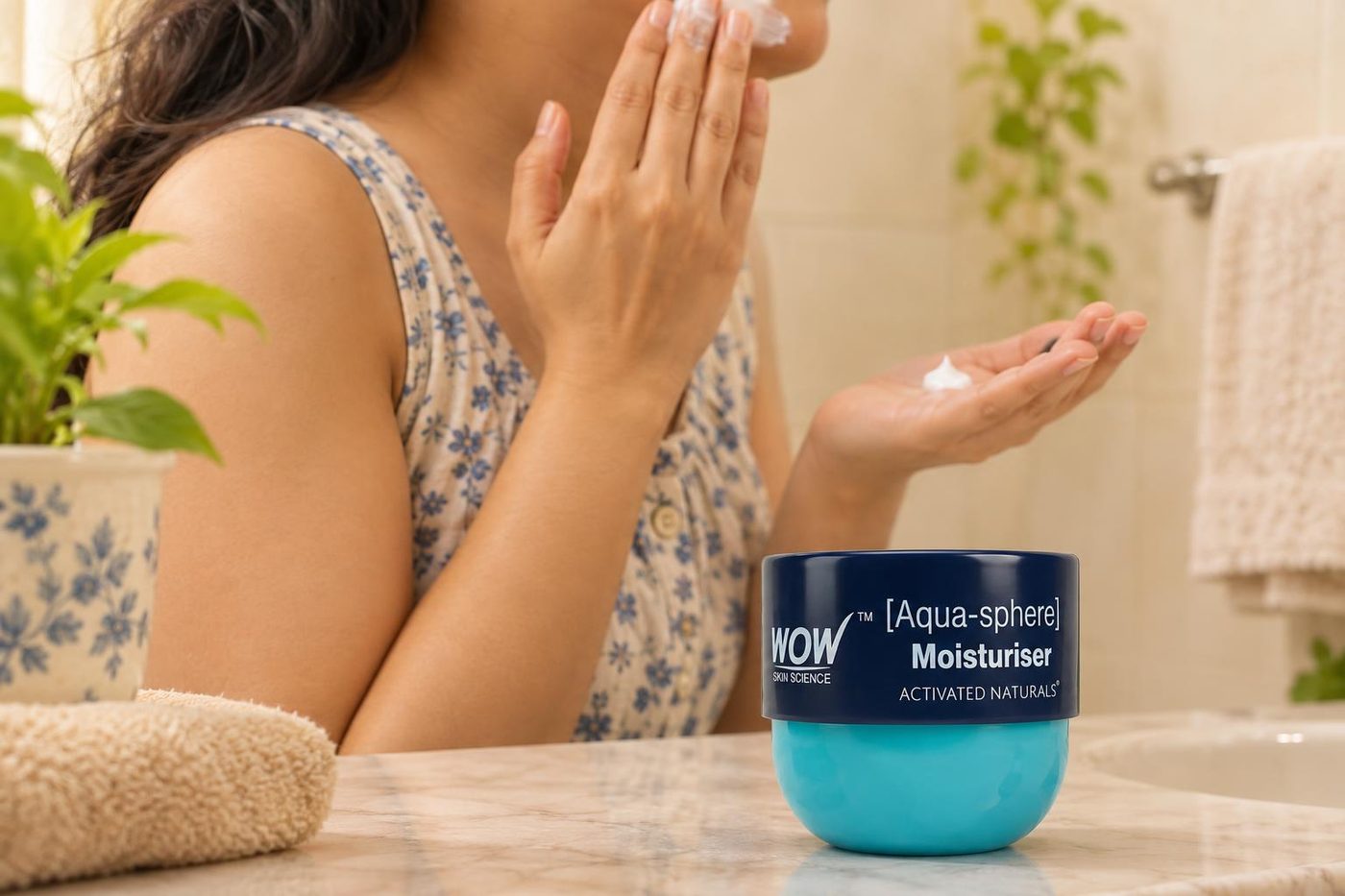
Many people do well with two: a lighter texture for the day and a richer cream at night. If you prefer a lightweight daily layer, a gel-style option such as the WOW Skin Science Aqua Sphere Moisturiser can sit comfortably under sunscreen, and you can add a richer cream on top on drier days or at night.
Dry skin face moisturiser vs body moisturiser
Your face and body have different needs, so one tub rarely suits both.
For the face:
Facial skin is thinner and more prone to clogged pores, so look for formulas labelled non-comedogenic if you get breakouts.
Lighter creams or gel-creams often work better by day, as they layer well under sunscreen and makeup.
The area around the eyes is delicate; use a gentle, fragrance-free product there.
For the body:
Shins, elbows, knees, hands and heels are usually the driest areas and can handle thicker creams, body butters or balms.
Apply right after your bath, while skin is still a little damp.
Rough heels and elbows respond well to a balm at night, with cotton socks for heels.
A dry skin face moisturiser can be used on the body in a pinch, but body creams are often too heavy for facial skin.
How to use a moisturiser for dry skin (simple routine)
The way you apply moisturiser makes a real difference. Here is a routine that works for most dry skin.
Morning
Cleanse gently. Use a mild, cream or low-foam cleanser with lukewarm water. On very dry days, a simple splash of water may be enough in the morning.
Hydrating layer (optional). A hydrating toner or hyaluronic acid serum on damp skin adds a little extra water.
Moisturise. Apply a pea-to-almond-sized amount while skin is still slightly damp. Pat and press rather than rub hard.
Sunscreen. Finish with a broad-spectrum sunscreen. Sun exposure can weaken the skin barrier and add to dryness over time.
Night
Cleanse. If you wore sunscreen or makeup, remove it fully with a gentle cleanser.
Treatments, if any. If you use retinoids or exfoliating acids, apply them on dry skin and start slowly, two or three nights a week.
Moisturise generously. Night is the time for your richest cream.
Seal dry patches. Dab a thin layer of balm or petroleum jelly on flaky areas, lips or the sides of the nose.
Habits that help moisturiser work better
Keep showers short and lukewarm rather than hot.
Pat skin dry with a soft towel; do not rub.
Moisturise within a few minutes of washing.
Use a humidifier, or even a bowl of water, in a room with AC or heaters running.
Drink enough water through the day, though topical moisture still matters most for the skin's surface.
Exfoliate gently, no more than once or twice a week, and stop if skin stings.
If you would like to compare options, look for cleansers, moisturisers and body care made specifically for dry skin.
Common mistakes that keep skin dry
Even a good moisturiser can feel like it is not working if a few habits get in the way.
Applying on bone-dry skin. Moisturiser locks in water; if there is little water to lock in, results are weaker.
Using too little. Dry skin often needs more product than you think, especially at night.
Skipping it in summer or monsoon. Humidity helps, but AC and frequent washing still pull moisture out.
Over-cleansing. Washing your face many times a day with foaming cleansers strips oils faster than any cream can replace them.
Stacking too many actives. Combining several exfoliating acids and retinoids at once can leave skin raw and flaky.
Changing products every week. Give a new moisturiser at least two to three weeks before judging it, unless it stings or causes a reaction.
When to see a dermatologist
Ordinary dryness usually improves with gentle care. Please consult a dermatologist if you notice:
Persistent itching, redness, or cracked skin that bleeds
Thick, scaly or well-defined patches
Dryness that does not improve after a few weeks of consistent care
Sudden dryness alongside other changes in your health
These can be signs of conditions such as eczema or psoriasis, which need proper diagnosis. If you are pregnant, breastfeeding, or on prescription skin medication, check with your doctor before adding new actives.
FAQs
Which is the best dry skin face moisturiser?
There is no single best one for everyone. Look for a fragrance-light formula that combines a humectant (like glycerin or hyaluronic acid), an emollient (like ceramides or squalane) and some occlusive support. Use a lighter texture by day under sunscreen and a richer cream at night.
How many times a day should I moisturise dry skin?
At least twice a day, morning and night, and after every face wash. For very dry hands or body areas, reapply whenever skin feels tight, such as after washing hands.
Does dry skin need moisturiser in summer?
Yes. Humidity may make your skin feel less tight, but AC, sun and sweat-related washing still cause water loss. Switch to a lighter lotion or gel-cream rather than skipping moisturiser altogether.
Can oily skin also be dry?
Oily skin can be dehydrated, meaning it lacks water rather than oil. It may feel tight yet look shiny. A light, non-comedogenic gel or lotion with humectants usually suits this combination well.
Is coconut oil enough as a moisturiser for dry skin?
Coconut oil is a good emollient for the body, but it lacks humectants, and some people find it clogs pores on the face. Applying it over damp skin helps, but a well-formulated cream usually gives more balanced results for the face.
Summary
A good moisturiser for dry skin brings together humectants, emollients and occlusives, in a texture that suits your climate and the time of day. Apply it to damp skin, keep cleansing gentle and showers lukewarm, and give it a few weeks of steady use. If dryness comes with persistent itching, cracking or patches, consult a dermatologist.
Enjoyed this article?
Get more beauty tips and skincare guides delivered to your inbox.
By subscribing you agree to receive emails from BuyWOW. Unsubscribe anytime.
Related Articles
SPF 50 বনাম SPF 55 সানস্ক্রিন: ২০২৬-এ কোনটি বেছে নেবেন?
আধুনিক সানস্ক্রিন UV রশ্মি, দূষণ ও ব্লু লাইট থেকে রক্ষা করে। SPF 50 ও SPF 55-এর আসল পার্থক্য, PA++++ কেন জরুরি এবং ভারতের গরমে সঠিক সানস্ক্রিন বাছাইয়ের উপায় জানুন।
SPF 50 বনাম SPF 55 ছানস্ক্ৰীন: ২০২৬ত কোনটো বাছিব?
আধুনিক ছানস্ক্ৰীনে UV ৰশ্মি, প্ৰদূষণ আৰু ব্লু লাইটৰ পৰা সুৰক্ষা দিয়ে। SPF 50 আৰু SPF 55 ৰ প্ৰকৃত পাৰ্থক্য, PA++++ ৰ গুৰুত্ব আৰু ভাৰতীয় গ্ৰীষ্মৰ বাবে সঠিক সুৰক্ষা বাছনি শিকক।
SPF 50 vs SPF 55 సన్స్క్రీన్: 2026లో ఏది ఎంచుకోవాలి?
ఆధునిక సన్స్క్రీన్లు UV కిరణాలు, కాలుష్యం, బ్లూ లైట్ నుంచి కాపాడతాయి. SPF 50, SPF 55 తేడా, PA++++ ఎందుకు ముఖ్యమో, భారత వేసవికి సరైన సన్స్క్రీన్ ఎలా ఎంచుకోవాలో తెలుసుకోండి.