
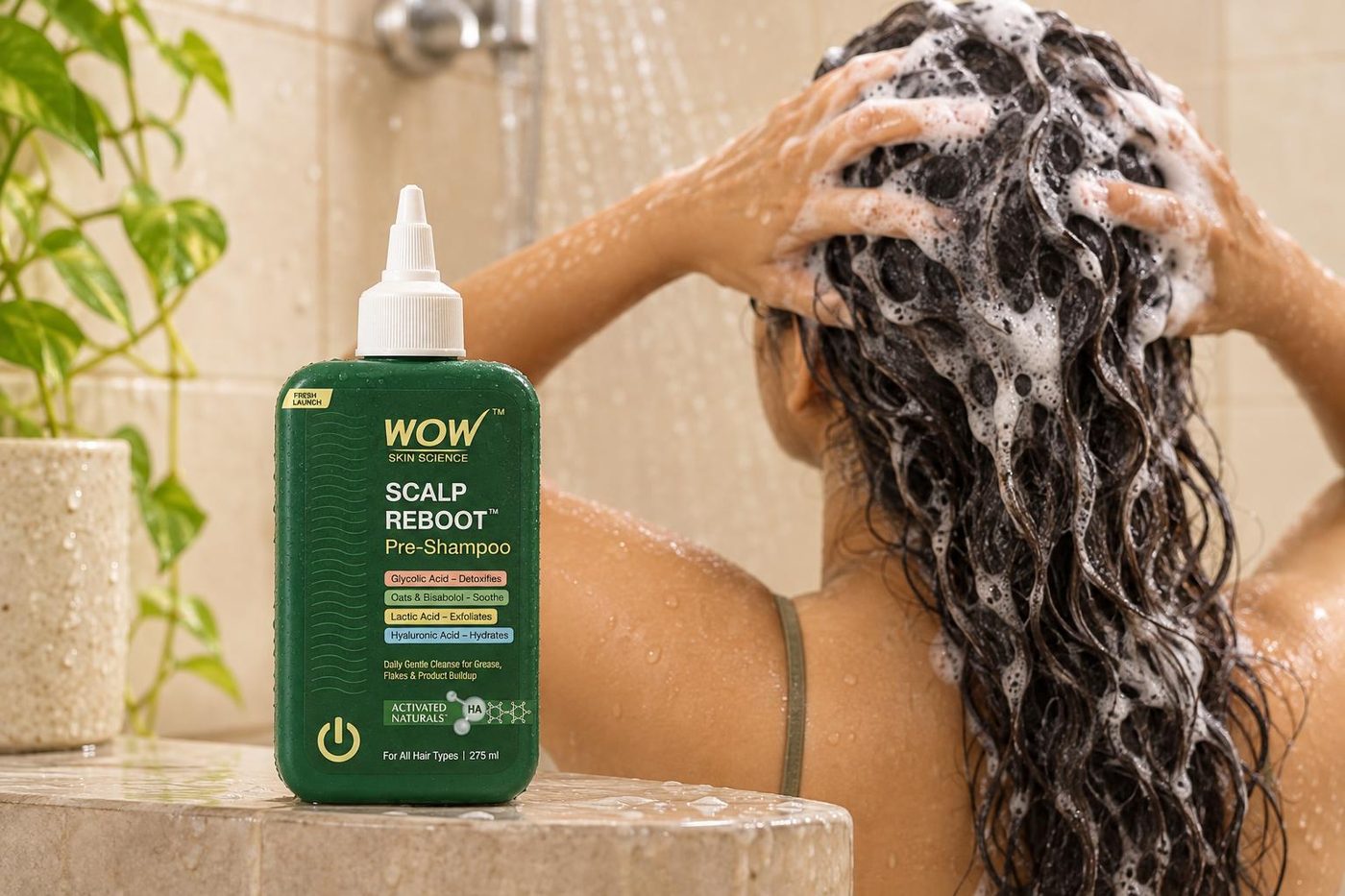
Non-Sulfate Shampoo: Does It Suit Indian Hair?
Less foam, gentler wash: here is who a non-sulfate shampoo actually helps, and how to make it work even after a hair-oiling night.
Garima
WOW Editorial Team
TITLE: Non-Sulfate Shampoo: Does It Suit Indian Hair?
A non-sulfate shampoo cleans your hair with milder cleansing agents instead of SLS or SLES. It suits dry, frizzy, curly, colour-treated or chemically smoothened hair and sensitive scalps best. It cleans well but lathers less, so heavily oiled or very oily scalps may need a second wash or a slightly different routine.
That is the short answer. Below is what a non sulfate shampoo actually does, whether it is worth switching, and how to use one in Indian conditions like hard water, humidity and weekly oiling.
What is a non-sulfate shampoo?
Sulfates are strong cleansers. The two you will see most on labels are sodium lauryl sulfate (SLS) and sodium laureth sulfate (SLES). They create the thick, rich foam many of us grew up with.
A non-sulfate (or sulfate-free) shampoo swaps these for gentler surfactants. Common ones include:
Cocamidopropyl betaine
Sodium cocoyl isethionate
Decyl glucoside or coco glucoside
Sodium lauroyl sarcosinate
Sodium cocoyl glutamate
These still lift oil, sweat and dirt. They are simply less likely to strip away the natural oils your hair and scalp need.
Does sulfate-free shampoo really work?
Yes, it cleans. The difference is in how it feels.
Because there is less foam, many people assume the hair is not clean and use too much product. Foam is not a measure of cleaning. What matters is how your scalp feels a few hours after washing.
Where sulfate-free shampoo genuinely helps is comfort. Hair tends to feel softer, less squeaky and less rough after drying, and the scalp is less likely to feel tight.
Who should switch to a non-sulfate shampoo?
It is a good fit if you have:
Dry or frizzy hair, especially through the post-monsoon months when humidity swings make frizz worse
Curly or wavy hair, which loses moisture faster along the curl
Colour-treated hair, since gentler cleansers are kinder to colour over repeated washes
Keratin or smoothening treatments, where salons usually advise sulfate-free care afterwards
A sensitive scalp that feels itchy or tight after regular shampoo
Frequent washes, for example daily gym or commute sweat
For dry, frizz-prone hair, a moisturising formula such as the WOW Skin Science Hyaneon Bond Repair Moisturizing Shampoo is the kind of wash that keeps the focus on softness rather than a squeaky feel. Always read the ingredient list of any shampoo to check which cleansers it uses.
Who may not love it?
Sulfate-free is not automatically better for everyone.
Very oily scalps may feel greasy by the next day with a mild cleanser alone.
Heavy oiling (the overnight champi with coconut or mustard oil) can be hard to remove in one gentle wash.
Lots of styling products like gels, sprays and dry shampoo, common during festive dressing up, can build up over time.
If you have dandruff that does not settle, flaking with redness, sudden hair fall or a scalp condition, consult a dermatologist. A shampoo swap is not a treatment.
How to use a non-sulfate shampoo the right way
A few small changes make a big difference:
Wet hair fully. Soak your scalp for a good 30 seconds before adding shampoo. Mild cleansers spread better on very wet hair.
Focus on the scalp. Massage with fingertips, not nails, for about a minute. Let the rinse run through the lengths.
Wash twice after oiling. The first wash breaks down the oil; the second actually cleans. This is normal, not a sign the shampoo is weak.
Use a coin-sized amount. Adding more will not create more foam. Add a little water instead.
Condition the lengths. Keep conditioner away from the roots if your scalp is oily.
Rinse with cool or lukewarm water. Very hot water dries hair out faster.
Can I use it with hard water?
Yes, but expect a slightly different feel. Hard water, common in many Indian cities, carries minerals that can leave hair dull or a little coated, and gentle cleansers may not lift that as easily.
What helps:
Do a final rinse with filtered or RO water if you can.
Once every two to four weeks, use a clarifying wash to clear buildup, then go back to your regular routine.
Avoid piling on leave-in products every day.
Will my hair feel greasy when I switch?
Some people notice a short adjustment period. Your scalp may take a few weeks to settle after years of strong cleansers.
Give it three to four weeks before you decide. If roots still feel heavy, wash a little more often, double cleanse, or keep a stronger shampoo for once-a-week use and the gentle one for the rest.
Is it good for humid, post-monsoon weather?
This is a season when sulfate-free often shines. Sticky humidity, sweat and changing temperatures leave many people with frizzy lengths and a scalp that needs frequent washing.
A gentler wash lets you clean more often without drying the ends. If you love a creamy, softening feel, the WOW Skin Science Coconut Milk Shampoo suits dry, frizz-prone hair through festive prep.
What does it cost in India?
Non-sulfate shampoos are now widely available across price bands, from everyday options to salon and speciality formulas. Price does not decide quality; the ingredient list and how your hair feels do.
Quick answers
Is sulfate-free shampoo good for hair fall?
It can reduce breakage from dryness and rough handling, but it does not treat hair fall. If shedding is sudden or heavy, see a dermatologist.
Can I use non-sulfate shampoo daily?
Yes. Its gentler cleansing makes it one of the better choices for frequent washing.
Is it safe during pregnancy?
Mild shampoos are generally a gentle choice, but check with your doctor if you have specific concerns or a sensitive scalp.
Can men use sulfate-free shampoo?
Absolutely. Hair type matters, not gender. Men with oily scalps may simply prefer to wash twice.
Why does my sulfate-free shampoo not lather?
Milder cleansers foam less. Wet your hair well, use a small amount and add water to spread it.
Takeaway: A non-sulfate shampoo is a gentler wash, best for dry, frizzy, curly, coloured or smoothened hair. Wash twice after oiling, clarify now and then in hard water, and give your scalp a few weeks to adjust.
Enjoyed this article?
Get more beauty tips and skincare guides delivered to your inbox.
By subscribing you agree to receive emails from BuyWOW. Unsubscribe anytime.
Related Articles
Does Biotin Shampoo Help Hair Growth or Just Breakage?
Biotin shampoo will not grow new hair on its own, but used well it can mean fewer snapped strands and fuller-looking hair. Here is the honest picture.
Apple Cider Vinegar Shampoo: Does pH Matter and How to Use It
Most people use apple cider vinegar shampoo wrong. Learn the pH science and application secrets that unlock the real transformation everyone talks about.
Shampoo Anti Dandruff: How to Choose the Right One in India
How to pick a shampoo anti dandruff formula by its active ingredient, use it with proper contact time, and build a simple routine that suits Indian weather.