
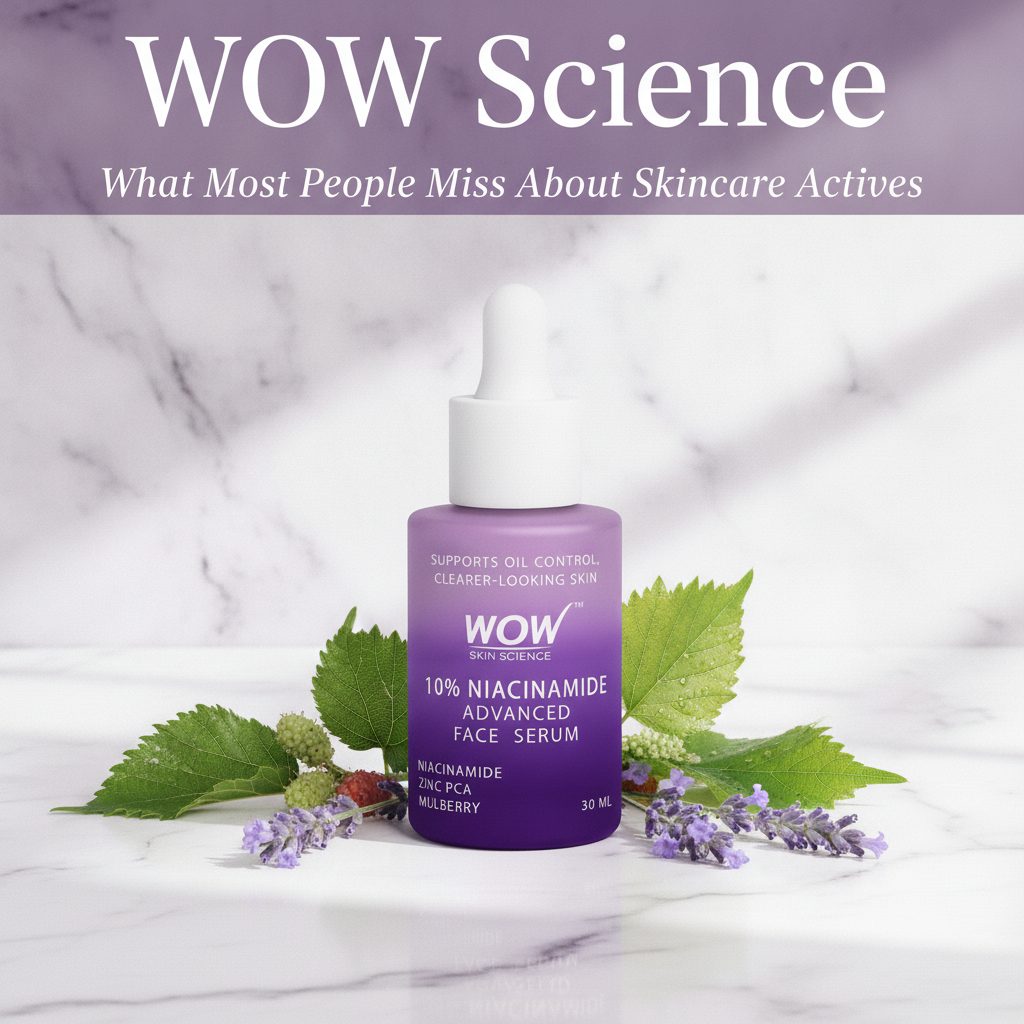
WOW Science: What Most People Miss About Skincare Actives
Most people use powerful skincare actives completely wrong. WOW Science reveals why your skin needs the right actives at the right concentrations, not just higher percentages.
WOW Skin Science Editorial Team
Beauty experts sharing science-backed skincare tips.
WOW Science: What Most People Miss About Skincare Actives
You've probably stared at a serum bottle, squinting at percentages like 2%, 10%, or 20%, wondering if higher numbers mean better results. Here's the truth: most people are using powerful active ingredients completely wrong. Not because they're careless, but because the science behind these ingredients is rarely explained properly.
Your skin doesn't need more actives. It needs the right actives at the right concentrations.
What Is WOW Science and Why It Matters for Your Skin
WOW Science is where proven dermatological research meets real-world skincare. It's not about fancy marketing terms or trendy ingredients that disappear next season. It's about formulating products based on actual clinical studies that show measurable results.
Think about it this way: your grandmother knew turmeric worked for brightening, but she didn't know why. Modern skincare science explains the mechanism. We now know curcumin inhibits melanin production through tyrosinase suppression. That's WOW Science — respecting traditional wisdom while understanding the biology beneath it.
The Science Behind Evidence-Based Skincare
Evidence-based skincare means every ingredient and concentration is backed by peer-reviewed research. When a study shows that 10% niacinamide reduces sebum production by 35% after 8 weeks, that becomes the benchmark. Not 5%, not 20% — 10%.
Clinical trials measure specific outcomes: trans-epidermal water loss, melanin index, sebum levels, pore diameter. These aren't subjective opinions. They're measurable changes in your skin's biology.
Why Most People Misunderstand Active Ingredients
Here's what happens: you see "vitamin C" on a label and assume all vitamin C products work the same. They don't. L-ascorbic acid at 15% with a pH of 3.5 penetrates skin effectively. Magnesium ascorbyl phosphate at 3% with a pH of 7 barely does anything.
Most people also think higher percentages equal better results. Wrong. Retinol at 1% can irritate like crazy, while 0.3% delivers excellent results with minimal redness. Your skin has biological limits.
The Indian climate adds another layer of complexity. High humidity affects how hyaluronic acid behaves. Excessive heat increases oil production, making some actives more necessary than others.
The 3 Most Misunderstood Active Ingredients (And How They Really Work)
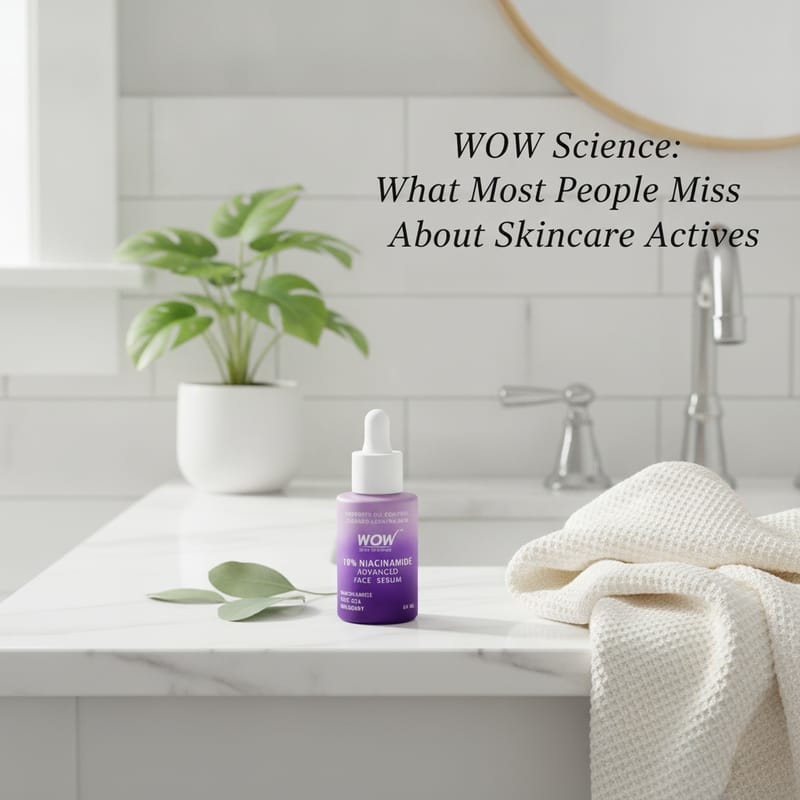
Let's talk about the three actives that confuse people most: niacinamide, hyaluronic acid, and salicylic acid. You've heard these names everywhere, but do you actually know how they work?
Niacinamide: The Multi-Tasking Powerhouse Everyone Gets Wrong
Niacinamide is vitamin B3. It works at the cellular level by boosting NAD+ production, which your cells need for energy and repair. This single mechanism triggers multiple benefits: reduced sebum, stronger barrier, less pigmentation.
People assume it's just for oily skin. Actually, niacinamide helps all skin types. It regulates oil without stripping, strengthens the moisture barrier, and reduces inflammation. Studies show 5% concentration delivers visible results, but 10% is the clinical sweet spot for maximum benefits without irritation.
The molecule is small enough to penetrate the epidermis easily. Once inside, it inhibits melanosome transfer — basically stopping pigment from reaching skin cells. That's how it evens out complexion.
Hyaluronic Acid: It's Not Actually Hydrating (Here's What It Does)
This one trips up everyone. Hyaluronic acid doesn't hydrate your skin. It attracts moisture from the environment and holds it. Big difference.
One molecule of HA can hold 1000 times its weight in water. But here's the catch: if you apply it in low humidity (like air-conditioned rooms), it pulls moisture from your skin instead of the air. That's why some people feel drier after using it.
Molecular weight matters enormously. Low molecular weight HA (below 50 kDa) penetrates deeper, plumping from within. High molecular weight HA (above 1000 kDa) sits on the surface, creating a moisture barrier. You need both for complete hydration.
Salicylic Acid: Why Concentration Isn't Everything
Salicylic acid is a beta hydroxy acid (BHA), meaning it's oil-soluble. Unlike AHAs that work on the surface, BHA dives into your pores. It dissolves the sebum plugs and dead skin cells clogging them.
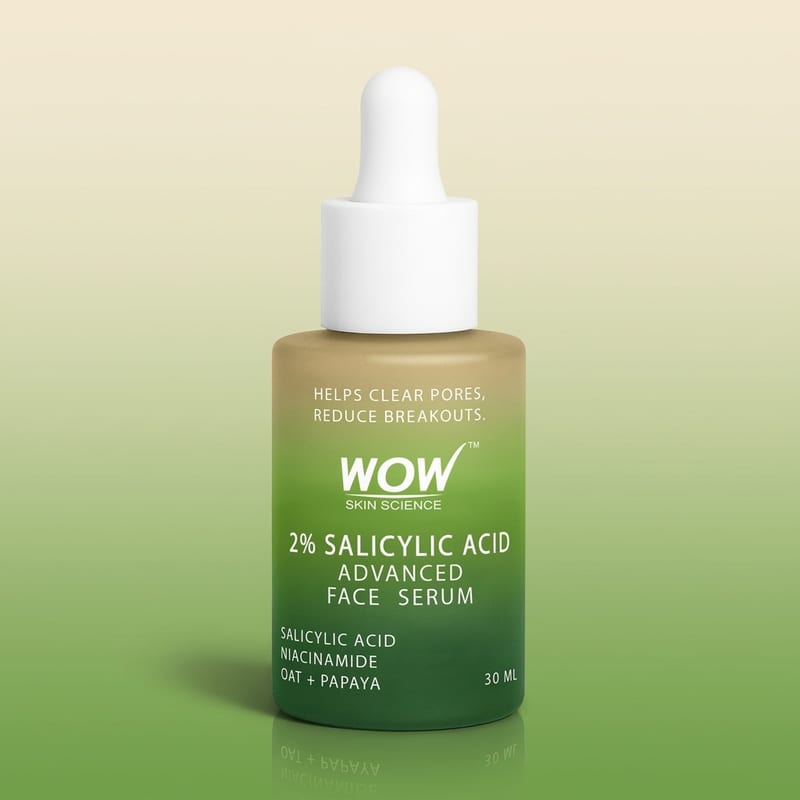
Here's what people miss: 2% salicylic acid at the right pH (3-4) outperforms 5% at the wrong pH (6+). The acid needs to be in its active form to exfoliate effectively. Higher pH neutralizes it.
Dermatologists consistently recommend 2% because it's strong enough to clear pores but gentle enough for regular use. Going higher increases irritation without improving results.
What Most People Miss About Niacinamide (The 10% Sweet Spot)
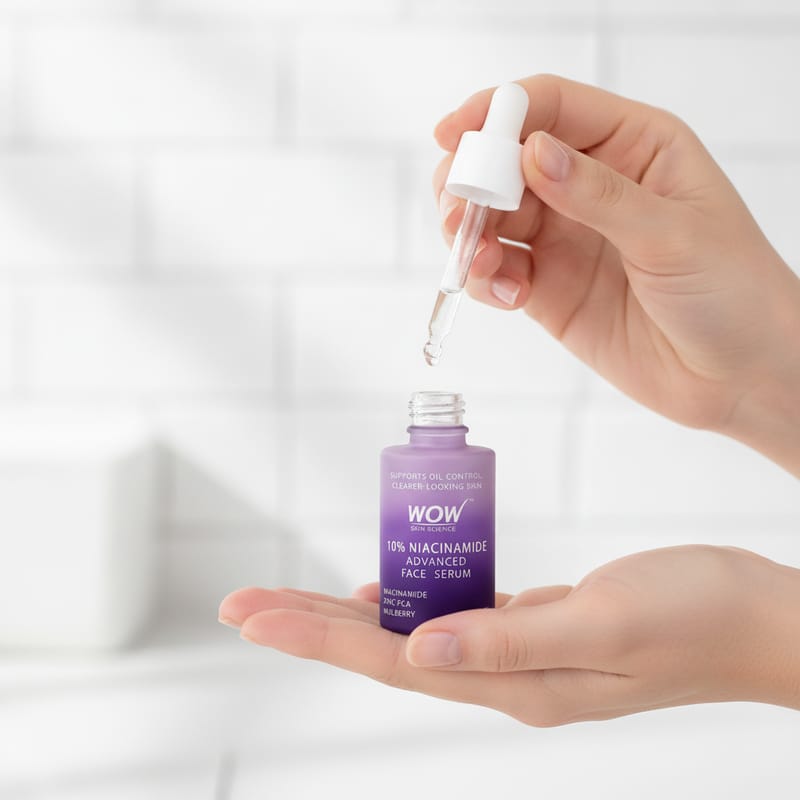
Your skin produces oil through sebaceous glands. When these glands go into overdrive — thanks to hormones, humidity, or genetics — you get that shiny T-zone by noon. Niacinamide directly reduces sebum production by regulating lipid synthesis in these glands.
Why 10% Niacinamide Is Clinically Optimal
Multiple studies tested niacinamide at different concentrations. Here's what they found:
2-5%: Mild improvement in barrier function, minimal visible changes
10%: Significant reduction in sebum (35% decrease), visible pore refinement, measurable pigmentation improvement
20%: Similar results to 10% but higher irritation risk, especially for sensitive skin
The 10% concentration hits the therapeutic threshold without crossing into irritation territory. Your skin can absorb and utilize it effectively.
Products formulated with 10% niacinamide, combined with complementary ingredients that support barrier health, work beautifully for Indian skin types dealing with heat and humidity.
Shop: 10% Niacinamide Face Serum Oil Control & Even Complexion → →
How to Layer Niacinamide with Other Actives
Niacinamide plays well with almost everything. You can use it with:
Hyaluronic acid: Apply HA first on damp skin, then niacinamide
Vitamin C: Despite old myths, they work fine together; apply vitamin C first
Salicylic acid: Use salicylic at night, niacinamide in the morning, or layer with 30 minutes between
Retinol: Niacinamide actually reduces retinol irritation; apply niacinamide first
Avoid mixing it only with extremely low pH products (below 3) as this can convert niacinamide to niacin, causing temporary flushing.
The Hyaluronic Acid Truth: Molecular Weight Matters More Than You Think
When you see "hyaluronic acid" on a label, the percentage tells you how much is in the formula. But molecular weight tells you how it works.
High vs. Low Molecular Weight: The Critical Difference
Low molecular weight HA (50-300 kDa):
Penetrates into the dermis
Provides deep, lasting hydration
Takes longer to show visible plumping
Better for fine lines and overall skin health
High molecular weight HA (1000-1500 kDa):
Stays on skin's surface
Creates immediate plumping effect
Forms a moisture-locking film
Great for instant smoothness
The best formulations use multiple molecular weights. A 2% hyaluronic acid serum with varied molecular weights delivers both instant and long-term hydration, giving you that plump, dewy look that lasts.
Shop: 2% Hyaluronic Acid Face Serum Deep Hydration for Plump Skin → →
The Humidity Factor Everyone Ignores
Here's something crucial for Indian skincare: humidity changes everything. In Mumbai's monsoon, HA pulls abundant moisture from the air — perfect. In Delhi's winter or Bangalore's air-conditioned offices, there's less environmental moisture to attract.
Application tips for different environments:
High humidity: Apply on slightly damp skin, follow with light moisturizer
Low humidity: Layer under a richer occlusive cream to seal moisture in
Air-conditioned spaces: Use a humidifier or apply over a hydrating toner
Never apply HA to completely dry skin in low humidity. You're basically giving it permission to pull water from your deeper skin layers.
Key Takeaways: Making WOW Science Work for Your Skin
The science is clear: concentration matters, but so does formulation, pH, molecular structure, and how you apply products. Your skin responds to chemistry, not marketing hype.
The Right Concentration for Your Skin Concern
Match your active to your concern:
Excess oil and large pores: 10% niacinamide
Dehydration and fine lines: 2% hyaluronic acid with mixed molecular weights
Acne and clogged pores: 2% salicylic acid at pH 3-4
Uneven tone: 10% niacinamide plus vitamin C
Aging prevention: Niacinamide + hyaluronic acid + retinol (start low, go slow)
Building an Evidence-Based Routine
Morning routine:
Cleanse with gentle, pH-balanced cleanser
Apply hyaluronic acid serum on damp skin
Follow with niacinamide serum
Moisturizer
Sunscreen (non-negotiable)
Evening routine:
Double cleanse if wearing sunscreen/makeup
Salicylic acid serum (2-3 times weekly)
Niacinamide serum (on non-salicylic nights)
Hyaluronic acid serum
Night cream or facial oil
Give each active 6-8 weeks before judging results. Skin cell turnover takes time. Consistency beats intensity every single time.
Frequently Asked Questions About Skincare Science
Can I use niacinamide and salicylic acid together?
Yes, absolutely. Apply salicylic acid first, wait 20-30 minutes for it to work at its optimal pH, then apply niacinamide. Niacinamide actually helps calm any irritation from salicylic acid. Many people use salicylic acid at night and niacinamide both morning and night for best results.
What percentage of hyaluronic acid is most effective?
Studies show 1-2% hyaluronic acid is optimal. Higher percentages don't improve results. What matters more is molecular weight diversity. Look for serums containing both low and high molecular weight HA for surface hydration plus deep moisture retention.
How long does it take for niacinamide to show results?
Most people notice oil control within 2-3 weeks. Visible pore refinement takes 4-6 weeks. Pigmentation improvement requires 8-12 weeks of consistent use. Remember, niacinamide works at the cellular level, so changes accumulate gradually but last longer.
Is 2% salicylic acid strong enough for acne?
Yes, 2% is the dermatologist-recommended concentration for acne. It's FDA-approved for acne treatment at this percentage. Higher concentrations increase irritation without improving effectiveness. Consistency and proper pH matter more than higher percentages. Use 2-3 times weekly for maintenance, daily for active breakouts.
Should I apply hyaluronic acid on wet or dry skin?
Always apply on damp skin. Mist your face with water or apply immediately after cleansing while skin is still slightly wet. This gives HA moisture to grab onto. Follow with moisturizer to seal everything in. In low humidity, this step becomes even more critical.
Enjoyed this article?
Get more beauty tips and skincare guides delivered to your inbox.
Related Articles
WOW Science: ಸ್ಕಿನ್ಕೇರ್ ಪದಾರ್ಥಗಳ ಬಗ್ಗೆ ಹೆಚ್ಚಿನ ಜನರು ಏನು ತಪ್ಪಿಸುತ್ತಾರೆ
ಹೆಚ್ಚಿನ ಜನರು ವೈಜ್ಞಾನಿಕವಾಗಿ ಸಮರ್ಥಿತ ಸ್ಕಿನ್ಕೇರ್ ಪದಾರ್ಥಗಳನ್ನು ಸಂಪೂರ್ಣವಾಗಿ ತಪ್ಪಾಗಿ ಬಳಸುತ್ತಾರೆ. ಪ್ರಕಾಶಮಾನ ಚರ್ಮ ಮತ್ತು ವ್ಯರ್ಥವಾದ ಹಣದ ನಡುವಿನ ವ್ಯತ್ಯಾಸ ಮಾರ್ಕೆಟಿಂಗ್ ಹೈಪ್ ಅಲ್ಲ, ಆದರೆ ನಿಜವಾದ ರಸಾಯನಶಾಸ್ತ್ರವನ್ನು ಅರ್ಥಮಾಡಿಕೊಳ್ಳುವುದರ ಮೇಲೆ ಅವಲಂಬಿತವಾಗಿದೆ.
WOW Science: ତ୍ୱଚା ପରିଚର୍ଯ୍ୟା ଉପାଦାନ ବିଷୟରେ ଅଧିକାଂଶ ଲୋକ କ'ଣ ମିସ୍ କରନ୍ତି
ଅଧିକାଂଶ ଲୋକ ବୈଜ୍ଞାନିକ ଭାବେ ସମର୍ଥିତ ତ୍ୱଚା ପରିଚର୍ଯ୍ୟା ଉପାଦାନ ସଂପୂର୍ଣ୍ଣ ଭାବେ ଭୁଲ ଭାବେ ବ୍ୟବହାର କରନ୍ତି। ଉଜ୍ଜ୍ୱଳ ତ୍ୱଚା ଏବଂ ନଷ୍ଟ ଅର୍ଥର ମଧ୍ୟରେ ପାର୍ଥକ୍ୟ ମାର୍କେଟିଂ ହାଇପ୍ ନୁହେଁ, ବରଂ ପ୍ରକୃତ ରସାୟନ ବିଜ୍ଞାନ ବୁଝିବାରେ ନିହିତ।
WOW Science: ਸਕਿਨਕੇਅਰ ਸਮੱਗਰੀ ਬਾਰੇ ਜ਼ਿਆਦਾਤਰ ਲੋਕ ਕੀ ਮਿਸ ਕਰਦੇ ਹਨ
ਜ਼ਿਆਦਾਤਰ ਲੋਕ ਵਿਗਿਆਨ-ਸਮਰਥਿਤ ਸਕਿਨਕੇਅਰ ਸਮੱਗਰੀ ਬਿਲਕੁਲ ਗਲਤ ਤਰੀਕੇ ਨਾਲ ਵਰਤਦੇ ਹਨ। ਚਮਕਦਾਰ ਚਮੜੀ ਅਤੇ ਬਰਬਾਦ ਪੈਸੇ ਵਿੱਚ ਅੰਤਰ ਅਸਲ ਰਸਾਇਣ ਨੂੰ ਸਮਝਣ ਵਿੱਚ ਹੈ, ਮਾਰਕੀਟਿੰਗ ਹਾਈਪ ਵਿੱਚ ਨਹੀਂ।