
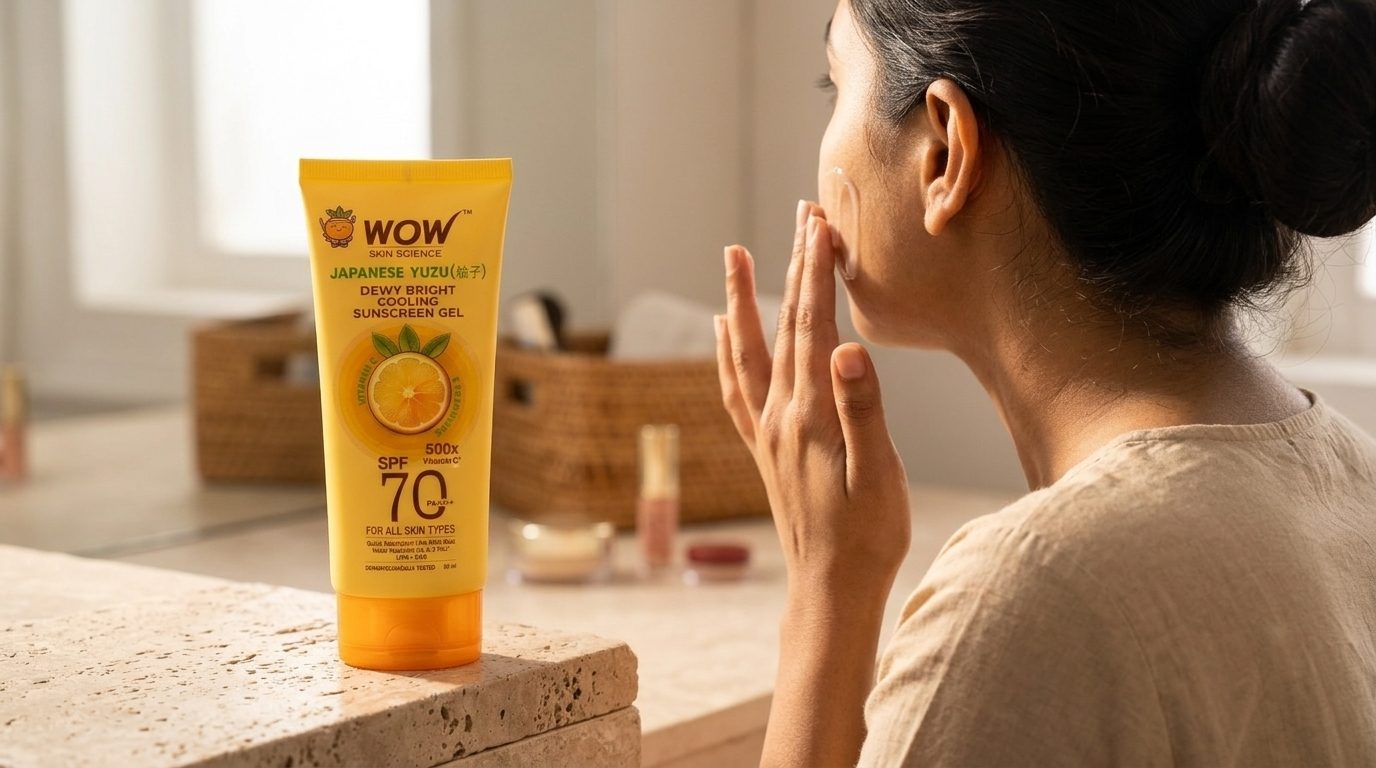
Oily Skin Sunscreen Cream: How to Pick a Non-Greasy One
How to choose an oily skin sunscreen cream that feels light, protects well and fits Indian heat, with SPF tips, textures to look for, and a simple daily routine.
Garima
WOW Editorial Team
TITLE: Oily Skin Sunscreen Cream: How to Pick a Non-Greasy One
The best oily skin sunscreen cream is one you will actually wear every day: a lightweight, broad-spectrum formula with SPF 30 to 50 and PA+++ or higher, in a gel, gel-cream or fluid texture that dries down without a greasy film. Look for labels like oil-free, non-comedogenic or matte finish, and apply enough. Two finger-lengths for face and neck is the usual guide.
Oily skin still needs sun protection, and in Indian summers and monsoons it often needs it more, because you are outdoors in strong UV while sweating. The trick is choosing the right texture and using it well.
Why oily skin still needs sunscreen
It is a common myth that oily skin is somehow protected from the sun. Sebum does not block UV rays in any meaningful way. Daily sun exposure contributes to tanning, uneven tone, dark spots and visible signs of ageing, whatever your skin type.
There is another reason. Many people with oily skin also deal with acne marks. UV exposure can make those marks look darker and linger longer, so skipping sunscreen can undo the work your serums are doing.
The real problem is not that oily skin does not need sunscreen. It is that heavy, rich formulas feel sticky, look shiny and can sit badly under makeup. Solve the texture, and the habit becomes easy.
How to choose an oily skin sunscreen cream
When you are standing in front of a shelf or scrolling a product page, these are the points that matter most.
Texture comes first
Gel: Water-based and usually the lightest. Absorbs quickly and suits very oily or acne-prone skin.
Gel-cream: A middle ground. Light like a gel but a little more cushioning, good for combination skin.
Fluid or lotion: Thin, spreadable and often fast-drying. Good under makeup.
Classic cream: Can work if it is labelled matte or oil-free, but traditional rich creams are often too heavy for oily skin in humid weather.
So while people search for a sunscreen cream, many with oily skin end up happiest with a gel or gel-cream texture.
Broad-spectrum protection
SPF measures protection mainly against UVB, the rays linked to sunburn. The PA rating (PA+ to PA++++) indicates protection against UVA, which is linked to tanning and long-term skin ageing. For Indian sun, a good everyday target is SPF 30 or above with PA+++ or PA++++.
Label words worth noticing
Non-comedogenic: Formulated with the intention of not clogging pores. Helpful, though every skin reacts differently.
Oil-free: No added oils in the base, which usually means a lighter feel.
Matte finish: Designed to reduce visible shine after it dries.
Water or sweat resistant: Holds up better during sweat, though you still need to reapply.
Fragrance-free: Worth choosing if your skin gets irritated easily.
Ingredients that suit oily skin
Some sunscreens include supporting ingredients that pair well with oily skin. Niacinamide is widely used to help balance the look of oiliness and pores. Lightweight humectants like hyaluronic acid add hydration without heaviness. Silica or similar powders help absorb shine.
If your skin is sensitive, mineral filters such as zinc oxide or titanium dioxide are often gentler, though some can leave a white cast. Chemical filters usually feel lighter and more invisible. Neither is automatically better. Pick what your skin tolerates and what you will wear daily.
Best sunscreen for oily skin: SPF 50 or SPF 30?
This is one of the most common questions. Both can work well. The difference in UVB protection between SPF 30 and SPF 50 is real but smaller than most people assume. What matters far more is applying enough and reapplying.
That said, SPF 50 makes sense if you:
Commute in direct sun or spend long hours outdoors
Live in a high-UV city or are travelling to the hills or the beach
Are working on fading tan or dark marks
Tend to apply a little less than the recommended amount, as most people do
A higher SPF gives you a little more buffer for real-life application. Just do not treat SPF 50 as permission to apply once and forget it.
If you want a lightweight option with high protection, the WOW Skin Science Sunscreen Gel for All Skin Types SPF 55 PA++++ has a gel texture that suits people who dislike heavy creams.
Best cream for oily skin: do you need a moisturiser too?
Many people with oily skin skip moisturiser, then wonder why their skin looks shinier by afternoon. When skin feels stripped, especially after harsh cleansing, it can feel tight and uncomfortable while still looking oily.
You have two practical options:
Use a separate light moisturiser: A gel moisturiser before sunscreen works well in drier months or air-conditioned offices.
Let your sunscreen double up: In hot, humid weather, a hydrating gel sunscreen may be all you need in the morning.
The best cream for oily skin is usually one that feels almost weightless: water-based, oil-free and quick to absorb. If you can feel a film an hour later, it is probably too rich for daytime use.
You can browse lightweight cleansers, serums and sunscreens for this skin type in the Oily Skin range.
How to use sunscreen on oily skin: a simple routine
A good product only works as well as your routine. Here is a straightforward morning and evening plan.
Morning
Cleanse gently. Use a mild face wash that removes overnight oil without leaving skin squeaky and tight.
Treat (optional). If you use a salicylic acid or niacinamide serum, apply it now and let it settle for a minute.
Moisturise lightly (optional). Skip this in peak summer if your sunscreen is hydrating enough.
Apply sunscreen. Use about two finger-lengths for face and neck. Dot it across forehead, cheeks, nose, chin and neck, then spread evenly. Do not forget ears and the hairline.
Wait a few minutes before makeup so the sunscreen can set.
Reapplying during the day
Sunscreen breaks down with sweat, wiping and time. Reapply roughly every two to three hours when you are outdoors, and after heavy sweating or swimming.
For oily skin, reapplication can feel messy. Try these:
Blot excess oil with a tissue or blotting paper first
Then apply a thin fresh layer of your gel sunscreen
If you wear makeup, a sunscreen stick or spray over makeup is a convenient top-up, though apply generously
Evening
Sunscreen, sweat and city pollution build up through the day, so cleanse properly at night. A thorough cleanse helps keep pores looking clearer.
If you use active ingredients, the evening is a good time. A serum like the WOW Skin Science Advanced 2% Salicylic Acid Face Serum can help unclog the look of pores and reduce visible oiliness when used as directed. Salicylic acid and similar actives can make skin more sensitive to the sun, which is one more reason to be consistent with sunscreen the next morning.
If you have acne that is painful or persistent, are pregnant or breastfeeding, or use prescription skin medication, consult a dermatologist before adding new actives.
Common mistakes that make sunscreen feel greasy
Often the problem is not the sunscreen but how it is layered.
Too many layers underneath: Heavy serums, oils and creams under sunscreen add up to shine. Keep morning steps minimal.
Not waiting between steps: Applying sunscreen over wet serum can cause pilling and a sticky finish.
Rubbing too hard: Gentle spreading and patting gives a smoother finish than vigorous rubbing.
Using too little: A thin smear may feel lighter but gives much less protection than the label suggests.
Skipping on cloudy or indoor days: UVA passes through clouds and glass, so sit near a window and you are still exposed.
Expecting a perfect matte finish all day: Some shine by afternoon is normal in Indian humidity. Blotting is your friend.
A quick buying checklist
Broad-spectrum, SPF 30 to 50 or above, PA+++ or PA++++
Gel, gel-cream or fluid texture
Labelled oil-free, non-comedogenic or matte
Comfortable enough to wear every single day
Patch-tested on your jawline for a couple of days before full use
FAQs
Which sunscreen cream is best for oily skin?
Look for a broad-spectrum sunscreen with at least SPF 30 and PA+++, in a lightweight gel or gel-cream texture labelled oil-free or non-comedogenic. The best one is the one that feels comfortable enough that you use it daily and reapply it.
Is SPF 50 better than SPF 30 for oily skin?
SPF 50 offers somewhat more UVB protection and gives a buffer if you under-apply. It is a good choice for long hours in the sun. For short daily exposure, a well-applied SPF 30 also works. Texture matters more for oily skin than the SPF number.
Can sunscreen cause breakouts on oily skin?
Some heavy or oil-rich formulas may feel congesting for certain people. Choosing non-comedogenic textures, cleansing properly at night and patch-testing first helps. If breakouts continue, consult a dermatologist.
Do I need a moisturiser if my sunscreen is hydrating?
Not always. In hot, humid weather, a hydrating gel sunscreen can be enough in the morning. In winter or air-conditioned spaces, a light gel moisturiser underneath can keep skin comfortable.
Should I apply sunscreen indoors?
Yes, if you sit near windows or step out at any point. UVA rays pass through glass, and short trips outside add up over time.
Summary
An oily skin sunscreen cream should feel light, protect broadly and be easy to reapply. Choose a gel or gel-cream with SPF 30 to 50 or higher and PA+++ or more, apply two finger-lengths, and top up through the day.
Keep your morning routine minimal, cleanse well at night, and see a dermatologist if acne or sensitivity persists.
Enjoyed this article?
Get more beauty tips and skincare guides delivered to your inbox.
By subscribing you agree to receive emails from BuyWOW. Unsubscribe anytime.
Related Articles
സാലിസിലിക് ആസിഡ് ക്ലെൻസർ: ഒഴിവാക്കേണ്ട 8 മുഖക്കുരു തെറ്റുകൾ
മുഖക്കുരു സാധ്യതയുള്ള ചർമ്മത്തിന് സാലിസിലിക് ആസിഡ് ക്ലെൻസർ എങ്ങനെ സഹായിക്കും, എങ്ങനെ തിരഞ്ഞെടുക്കാം, ഉപയോഗിക്കാം, മുഖക്കുരു കൂട്ടുന്ന 8 ശീലങ്ങൾ.
سیلیسیلک ایسڈ والا کلینزر: مہاسوں کی 8 غلطیاں
سیلیسیلک ایسڈ والا کلینزر مہاسوں والی جلد میں کیسے مدد کرتا ہے، اسے کیسے چنیں اور لگائیں، اور وہ 8 روزمرہ عادتیں جو چپکے سے پمپلز بڑھاتی ہیں۔
স্যালিসিলিক অ্যাসিড স্কিন ক্লেনজার: ব্রণের ৮টি ভুল
স্যালিসিলিক অ্যাসিড ক্লেনজার ব্রণপ্রবণ ত্বকে কীভাবে কাজ করে, কীভাবে বাছবেন ও ব্যবহার করবেন, আর কোন ৮টি অভ্যাস চুপিচুপি ব্রণ বাড়ায়।