
Sun Protection for Oily Skin: A Daily Routine
Your oily skin needs sunscreen daily, and the right texture, amount and reapplying habit keep it protected without that midday shine.
Garima
WOW Editorial Team
TITLE: Sun Protection for Oily Skin: A Daily Routine
Oily skin needs sunscreen every single day, and the right one will not make you greasier. Good sun protection for oily skin comes down to a light gel or fluid sunscreen with broad-spectrum SPF 30 or higher, used in the right amount, reapplied through the day and removed properly at night.
The routine below covers morning, midday and night. It is built for Indian weather, including the sticky post-monsoon weeks and long November days spent outdoors at weddings, markets and on the road.
Why does oily skin still need sunscreen?
Oil on your skin does not block UV rays. UVA passes through clouds and window glass, and it adds to tanning, dark spots and the early look of fine lines.
Oily, acne-prone skin also tends to get dark marks after breakouts. Sun can make these marks look darker and last longer, so daily SPF helps protect skin while they fade.
After the monsoon the sun is strong again while humidity often stays high. That is when people skip sunscreen because it feels sticky. The fix is a better texture, not skipping it.
What does sun protection for oily skin need on the label?
Broad spectrum: protects against both UVA and UVB.
SPF 30 or higher: a widely recommended minimum for daily use. Choose SPF 50 for long hours outdoors.
PA+++ or PA++++: the PA rating shows UVA protection. More plus signs, more UVA protection.
Texture words: gel, fluid, aqua, matte or oil-free usually feel lightest.
Non-comedogenic: formulated to be less likely to clog pores, useful if you get breakouts.
Chemical or mineral: which is better for oily skin?
Chemical filters usually feel thinner and blend easily, which many oily-skin users prefer. Mineral filters such as zinc oxide sit on the skin and can feel slightly heavier, but some people find them gentler, and zinc oxide tends to feel a little matte.
Both work when used properly. Choose the one you will actually wear every day.
The morning routine (AM)
Cleanse (1 minute). Use a gentle gel or foaming face wash to remove overnight oil and sweat. Skip harsh scrubbing and very hot water; stripped skin feels tight and can look oilier later. In hard-water areas, a final splash of filtered or boiled-and-cooled water can help skin feel less tight.
Light hydration (optional, 1 minute). Oily skin can still be dehydrated, especially in air-conditioned rooms. Use a thin water-based gel if skin feels tight. If your sunscreen is a hydrating gel, skip this on humid days: fewer layers, less shine.
Apply sunscreen (2 minutes, about 15 minutes before stepping out). Most people use too little. Squeeze two finger-lengths along your index and middle fingers for face and neck, roughly a quarter teaspoon.
Control shine (30 seconds). If you shine quickly, press a little translucent powder over the T-zone. Keep makeup light on top; heavy foundation over sunscreen on a humid day is what causes that melting feeling.
How do I apply sunscreen so it does not pill or feel greasy?
Dot it on forehead, cheeks, nose, chin and neck.
Spread in light, even strokes instead of rubbing hard.
Cover ears, hairline and the sides of the neck.
If two finger-lengths feels heavy, apply two thin layers and let the first set for a minute.
Wait 10–15 minutes before makeup or stepping out.
How often should you reapply sunscreen?
Sun, sweat and touching your face break sunscreen down. Reapply every 2–3 hours outdoors, and right after heavy sweating, swimming or wiping your face.
If you are mostly indoors away from windows, one careful morning layer is usually enough. Reapply before heading out into the evening sun.
Can I reapply sunscreen over makeup?
Yes:
Blot oil first with blotting paper or a clean tissue. Press, do not wipe.
Pat on a small amount of fluid sunscreen with fingertips or a damp sponge.
Or top up with an SPF powder or spray, used generously; a light dusting gives less protection than the label suggests.
Keep a small sunscreen tube in your bag for shopping trips and travel days.
Can I use sunscreen in humid weather without feeling sticky?
Yes. Humidity is the main reason oily skin feels greasy in October and November across much of India.
Pick a gel or fluid texture and skip a separate moisturiser on very humid days.
Let each layer settle before adding the next.
Blot during the day rather than washing your face again and again.
Add physical protection: a cap, sunglasses, an umbrella and shade between roughly 10 am and 4 pm, when UV is strongest.
The night routine (PM)
Remove sunscreen properly (2 minutes). Sunscreen, sweat, pollution and oil left overnight can contribute to clogged pores. After water-resistant sunscreen or makeup, start with micellar water or a cleansing balm, then use your face wash. A retinol cleanser such as the WOW Skin Science Retinol Face Wash can fit into this evening wash; retinol pairs best with diligent sunscreen the next morning.
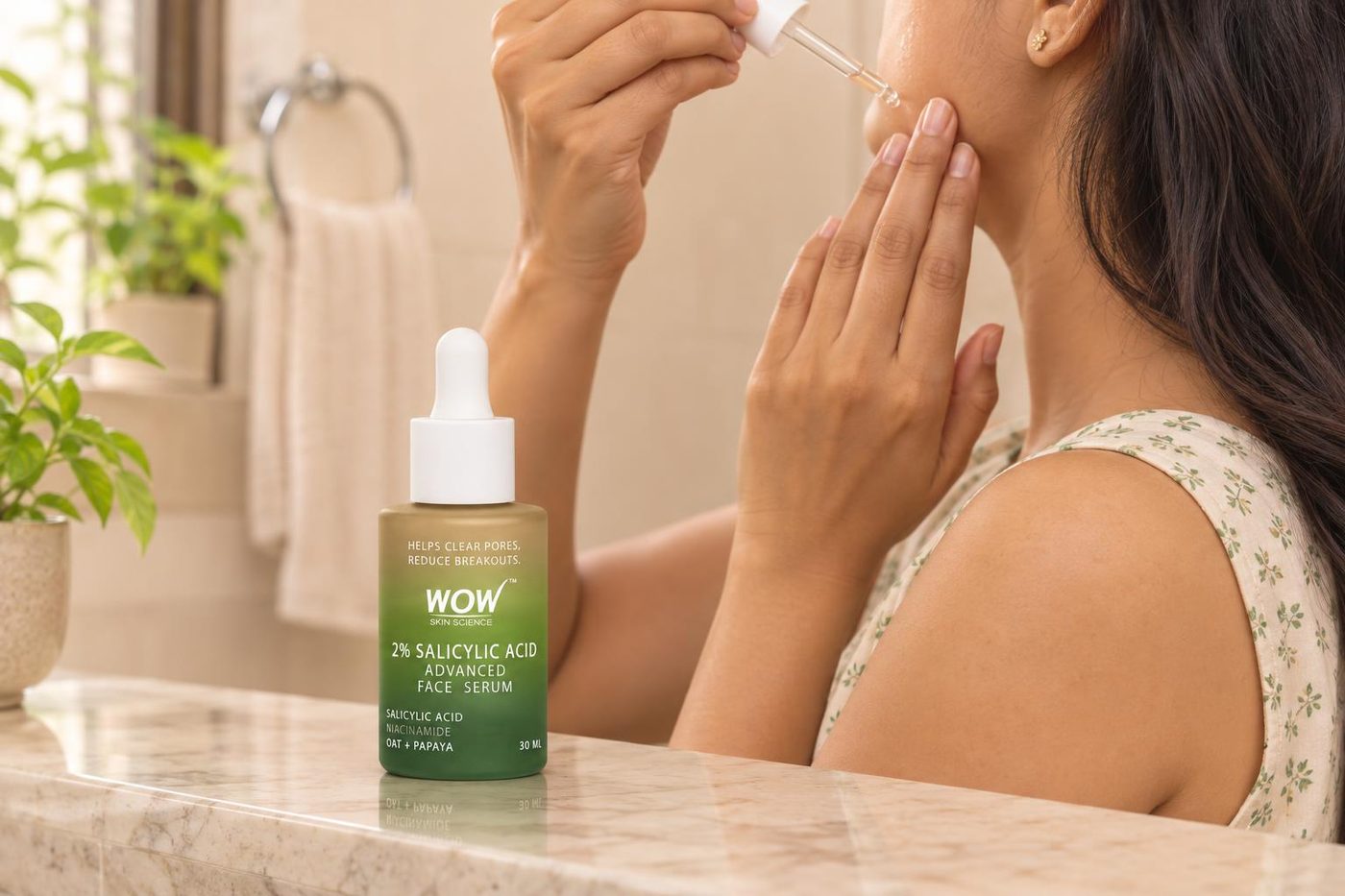
Oil-control treatment (2–4 nights a week). Salicylic acid is oil-soluble, so it works into pores to help clear excess oil. Try a few drops of the WOW Skin Science Advanced 2% Salicylic Acid Face Serum on clean, dry skin, starting two or three nights a week. Exfoliating acids can make skin more sun-sensitive, so morning SPF matters even more. When starting out, do not layer salicylic acid and retinol on the same night.
Light moisturiser (1 minute). Finish with a thin gel. Well-moisturised oily skin often feels more balanced the next day.
If you want to build the rest of your routine around these steps, look for light, oil-free products made for oily skin.
Does sunscreen cause breakouts on oily skin?
Some very rich formulas can feel clogging, but sunscreen itself is not the enemy. Breakouts usually come from the wrong texture, not cleansing it off at night, or layering too many heavy products.
Patch test a new sunscreen on your jawline for a few days before using it on your full face. If breakouts are frequent, painful or leave deep marks, consult a dermatologist.
Who should take extra care?
Pregnant or breastfeeding: check with your doctor before using retinol or salicylic acid products.
On acne medication or prescription creams: some make skin more sun-sensitive, so ask your dermatologist which sunscreen and actives to use alongside them.
Sensitive or reactive skin: mineral and fragrance-free sunscreens may suit you better. Patch test first.
Quick answers
Is SPF 50 better than SPF 30 for oily skin?
Both protect well when applied in the right amount. SPF 50 adds a little more for long outdoor days; for oily skin, texture matters more than the number.
Can I skip moisturiser if I use sunscreen?
On humid days, yes, if your sunscreen is a hydrating gel and your skin does not feel tight.
Do I need sunscreen indoors?
If you sit near windows or step out often, yes. UVA passes through glass.
Can a mattifying primer replace sunscreen?
Only if it is labelled broad spectrum with SPF 30 or higher, and you apply enough of it.
Is a matte sunscreen enough on its own?
Yes, if it is broad spectrum, SPF 30 or higher, applied at two finger-lengths and reapplied.
Oily skin does not need less sunscreen, just a lighter one used generously and reapplied. Pick a gel or fluid SPF 30+, cleanse it off at night, and your skin stays protected without the midday shine.
Enjoyed this article?
Get more beauty tips and skincare guides delivered to your inbox.
By subscribing you agree to receive emails from BuyWOW. Unsubscribe anytime.
Related Articles
Best Sunscreen for Tan Protection + 6 Tips to Fade Sun Tan
How to choose the best sunscreen for Indian sun and your skin type, apply it properly, and follow six gentle body care habits that help fade the look of tan.

Why Your Body Skin Needs SPF Too: A Complete Guide to Body Sun Protection
Your face gets SPF, but your arms, legs, and shoulders take the same UV damage. Discover why body sun protection is non-negotiable in India's extreme UV climate.
5-Step Morning Skincare Routine for Oily Skin
Discover the perfect morning skincare routine to control excess oil and shine in hot weather. Science-backed steps that actually work for oily skin.