
Black Stains on Face: 7 Causes and How to Fade Them
Those dark patches on your cheeks usually have one of seven causes, and knowing which one you have changes what actually helps them fade.
Garima
WOW Editorial Team
TITLE: Black Stains on Face: 7 Causes and How to Fade Them
Black stains on face are usually patches of hyperpigmentation, extra melanin left behind by sun, pimples, hormones, friction or irritation. Most fade gradually with daily SPF, gentle exfoliation and spot-fading ingredients like niacinamide and alpha arbutin. New, changing or very dark patches need a dermatologist to take a look.
The trick is knowing which cause is behind your marks, because the fix is slightly different for each. Here are the seven most common ones on Indian skin, and what to do about each.
1. Is the sun causing my dark spots?
Very often, yes. UV rays push skin to make more melanin, and Indian skin, which is rich in melanin, darkens easily. Spots usually show up on the cheekbones, forehead and nose, the parts that face the sun first.
Post-monsoon, the clouds clear and the October sun is strong again, even on days that feel pleasant.
What to do:
Apply a broad-spectrum sunscreen of SPF 30 or higher every morning. SPF 50 is a good choice for Indian summers and outdoor days.
Use about two finger-lengths for the face and neck.
Reapply every 2 to 3 hours outdoors, and after sweating or washing your face.
Without sunscreen, no spot-fading product can keep up with fresh sun damage.
2. Why do pimples leave black marks behind?
When a pimple heals, the inflammation can leave a brown or black mark called post-inflammatory hyperpigmentation. It is not a scar, and it usually fades over time, but it can take weeks to months. Picking or squeezing makes it darker and slower to go.
What to do:
Keep hands off active pimples.
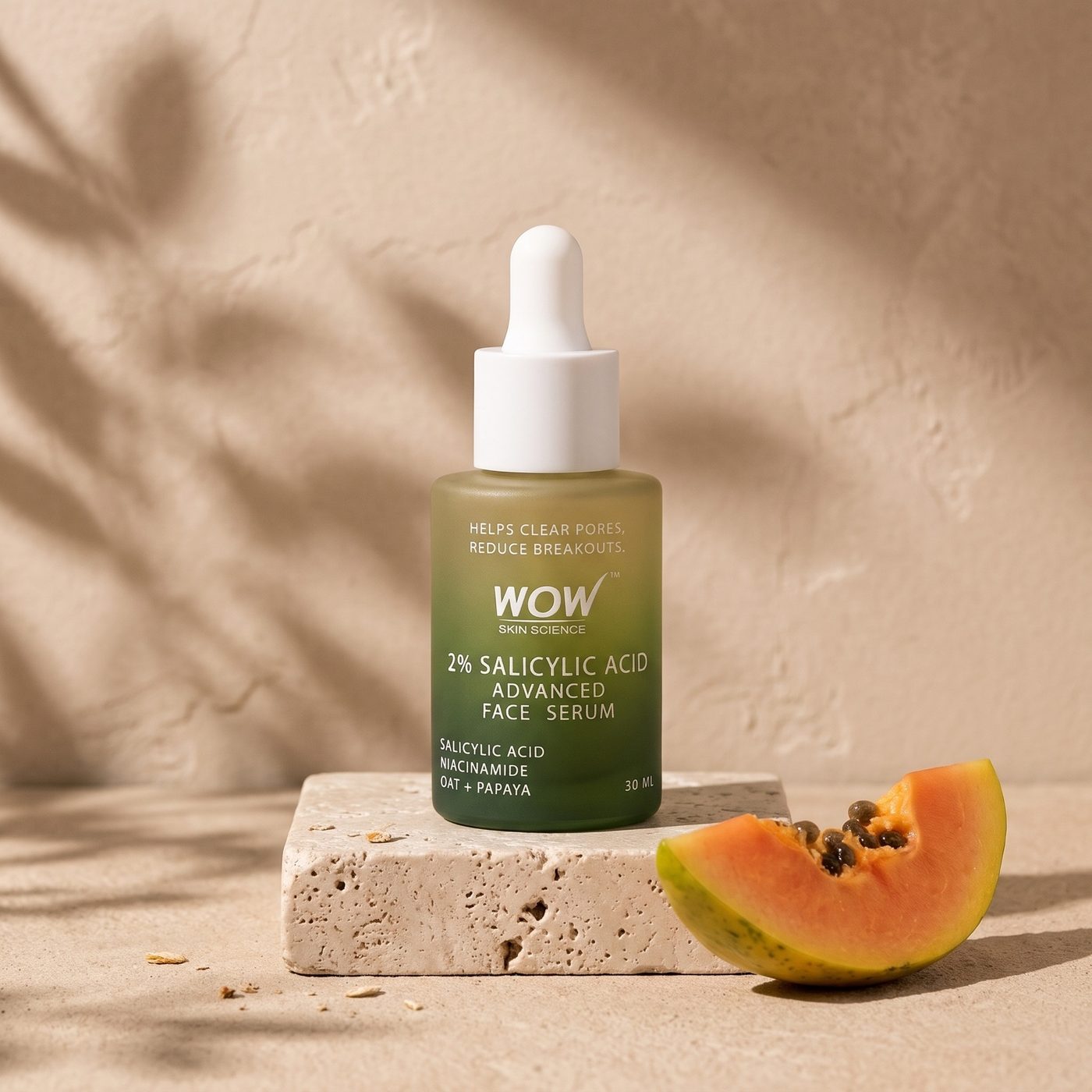
Use salicylic acid to keep pores clear, so fewer new pimples (and new marks) form. A few drops of an Advanced 2% Salicylic Acid Face Serum at night, 3 to 4 times a week to start, suits oily and acne-prone skin.
Pair it with sunscreen in the morning, since sun darkens healing marks.
3. Could hormones be behind the patches?
Larger, symmetrical brown-grey patches on both cheeks, the upper lip or forehead may be melasma. It is linked to hormonal changes such as pregnancy or hormonal medicines, and is triggered further by sun and heat.
What to do:
See a dermatologist for a proper diagnosis. Melasma behaves differently from regular dark spots and needs a planned approach.
Be strict with sunscreen and a hat or umbrella outdoors.
If you are pregnant or breastfeeding, check with your doctor before starting any active ingredient.
4. Does scrubbing hard make dark spots worse?
Yes. Harsh scrubs, rough towels and constant rubbing cause friction, and friction can darken skin over time, especially on the chin, around the mouth and along the jawline.
What to do:
Swap gritty scrubs for a gentle cleanser.
Pat your face dry instead of rubbing.
Avoid threading or waxing on freshly irritated skin.
5. Can pollution and heat darken my face?
City pollution and heat add stress to skin and can make dullness and uneven tone more noticeable. Hard water can also leave skin dry and tight, which makes marks look more prominent.
What to do:
Cleanse every night to remove sunscreen, sweat and grime.
Follow with a light moisturiser to support the skin barrier.
Do not overwash; twice a day is enough.
6. Are home remedies like lemon safe for black stains?
Lemon juice, baking soda, toothpaste and undiluted essential oils are common tips, but they can irritate skin. Irritation leads to inflammation, and on Indian skin inflammation often means more pigmentation, not less. Lemon on skin followed by sun exposure can also cause a reaction.
What to do:
Skip harsh kitchen remedies on the face.
If you like gentle DIY care, plain aloe vera gel or chilled curd as a soothing mask is a kinder choice. Patch test first.
7. Is dead skin making my face look darker?
Sometimes the "stain" is a build-up of dead skin cells, especially around the mouth, nose sides and forehead. The skin looks dull, rough and a shade darker.
What to do:
Exfoliate gently, not aggressively. A cleanser with skin-renewing ingredients, like a Retinol Face Wash used in the evening, can help skin look smoother and more even.
Start a few times a week, moisturise well and always use sunscreen the next morning.
Avoid retinol products if you are pregnant or trying to conceive, unless your doctor says otherwise.
How do I remove black stains from my face with a simple routine?
Consistency matters more than the number of products. A basic routine looks like this:
Morning
Cleanse with a gentle face wash.
Apply a spot-fading serum with alpha arbutin or niacinamide.
Finish with SPF 50 sunscreen.
Night
Cleanse to remove sunscreen and pollution.
Use salicylic acid if you get pimples, or a retinol cleanser for dullness, on alternate nights. Do not stack strong actives on the same night.
Moisturise.
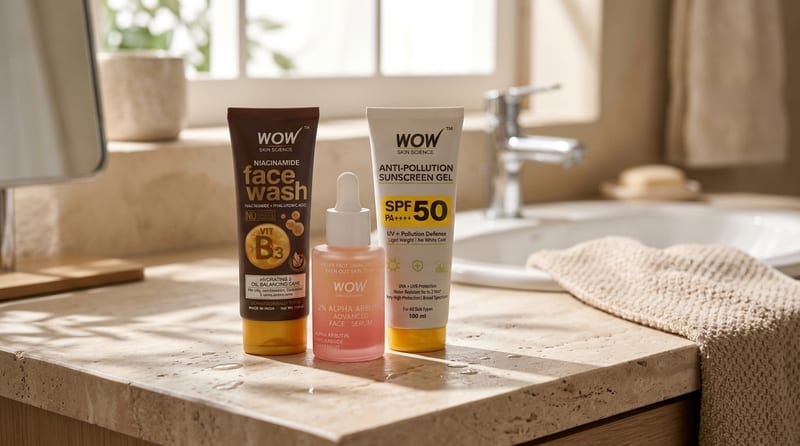
If you want the morning steps in one place, the Spot-Fade & Protect Kit brings together a niacinamide face wash, alpha arbutin serum and SPF 50 sunscreen.
Give any routine 8 to 12 weeks before judging it. Skin renews slowly, and marks fade gradually.
Prepping skin for the festive season
With Diwali and wedding functions coming up, it is tempting to try something new a week before. Keep it gentle: no new strong actives right before an event, and patch test anything new. If you enjoy a pampering at-home facial before a big day, do it at least 3 to 4 days ahead so any redness settles.
When should I see a dermatologist?
Book a visit if:
A spot is new, growing, raised, itchy, bleeding or has an uneven border or colour.
You have large patches on both cheeks that could be melasma.
Dark, velvety patches appear on the neck or underarms, which can be linked to health conditions.
Nothing has improved after three months of a steady routine.
You are pregnant, breastfeeding or on medication.
Quick answers
Can black spots on the face go away on their own?
Leftover pimple marks often fade slowly on their own, but sun protection and gentle care help them fade sooner and stop them from getting darker.
How long does it take for dark spots to fade?
Usually 8 to 12 weeks of consistent care, longer for deeper or older marks.
Is it safe to use these ingredients in humid weather?
Yes. Choose lightweight serums and gel textures, and a sunscreen that does not feel heavy, so you actually wear it daily.
Can I use salicylic acid and retinol together?
Start with one at a time, on alternate nights. Using both together can dry out and irritate skin.
Most black stains on the face come from sun, old pimples or irritation, and they usually fade with patience. Wear sunscreen daily, be gentle with your skin, and see a dermatologist for any spot that changes.
Enjoyed this article?
Get more beauty tips and skincare guides delivered to your inbox.
By subscribing you agree to receive emails from BuyWOW. Unsubscribe anytime.
Related Articles
Black Marks on Face: Causes and What Fades Them
Those dark spots left by pimples and sun can fade, but only if you pick the right ingredients and wear sunscreen every single day.
Fade Dark Spots Naturally: Hyperpigmentation Solutions
Aloe, curd, besan or lemon? Here is which kitchen remedies for dark spots are worth your time, and which can leave marks darker than before.
Face Serum: Which One Suits Your Skin Type?
A face serum only works when its ingredient matches your skin, so here is how to pick one for oily, dry or dull skin and use it well.